


Tips for Packing Winter Lunches: Cooking Ideas and Recommended Recipes
In the cold winter months, bento lunches often end up getting chilled and cold. This article provides a thorough guide on how to enjoy delicious lunches even in winter. We also introduce recommended recipes and tips for using Food Jars, which keep your meals warm for hours. We hope you find these ideas helpful!
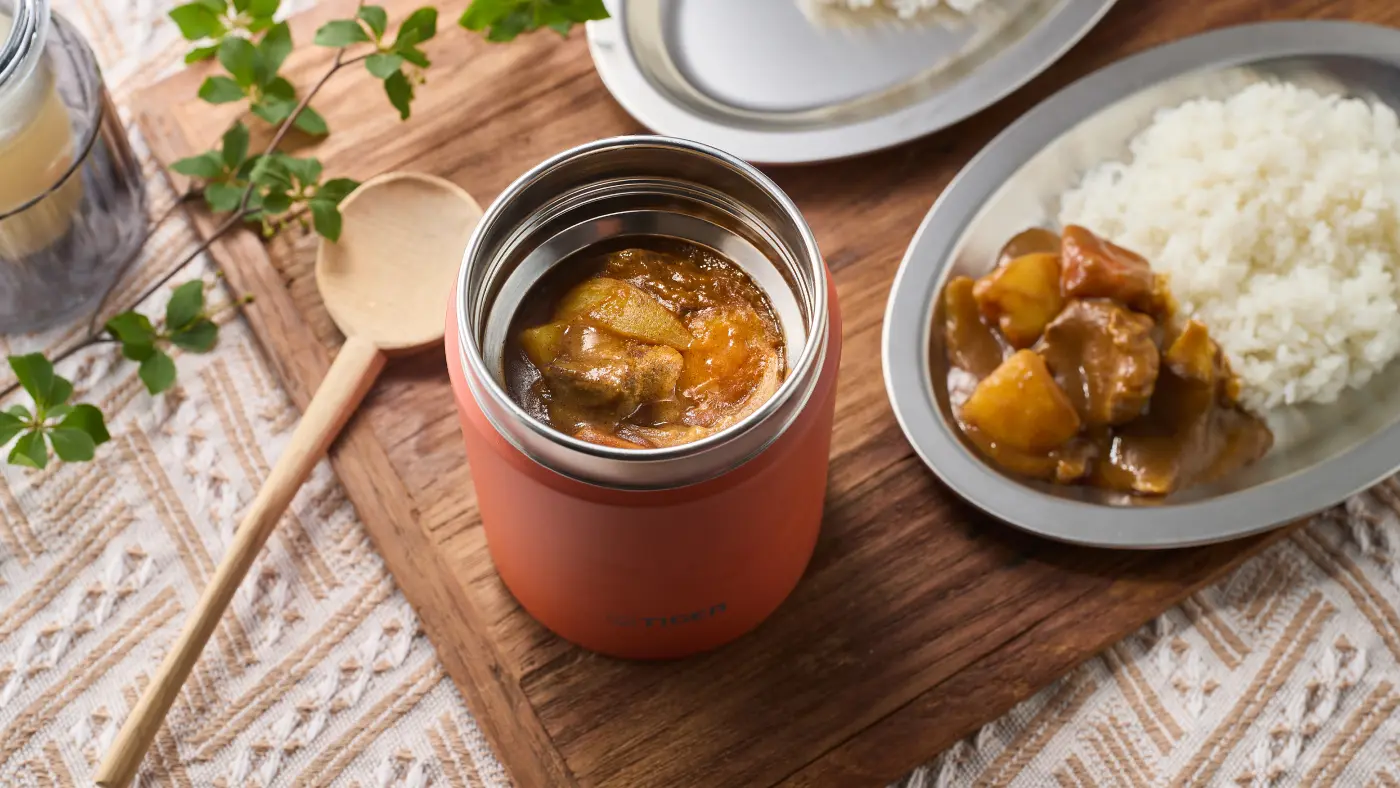
Table of Contents
Hygiene Matters: Packing Lunches in Winter
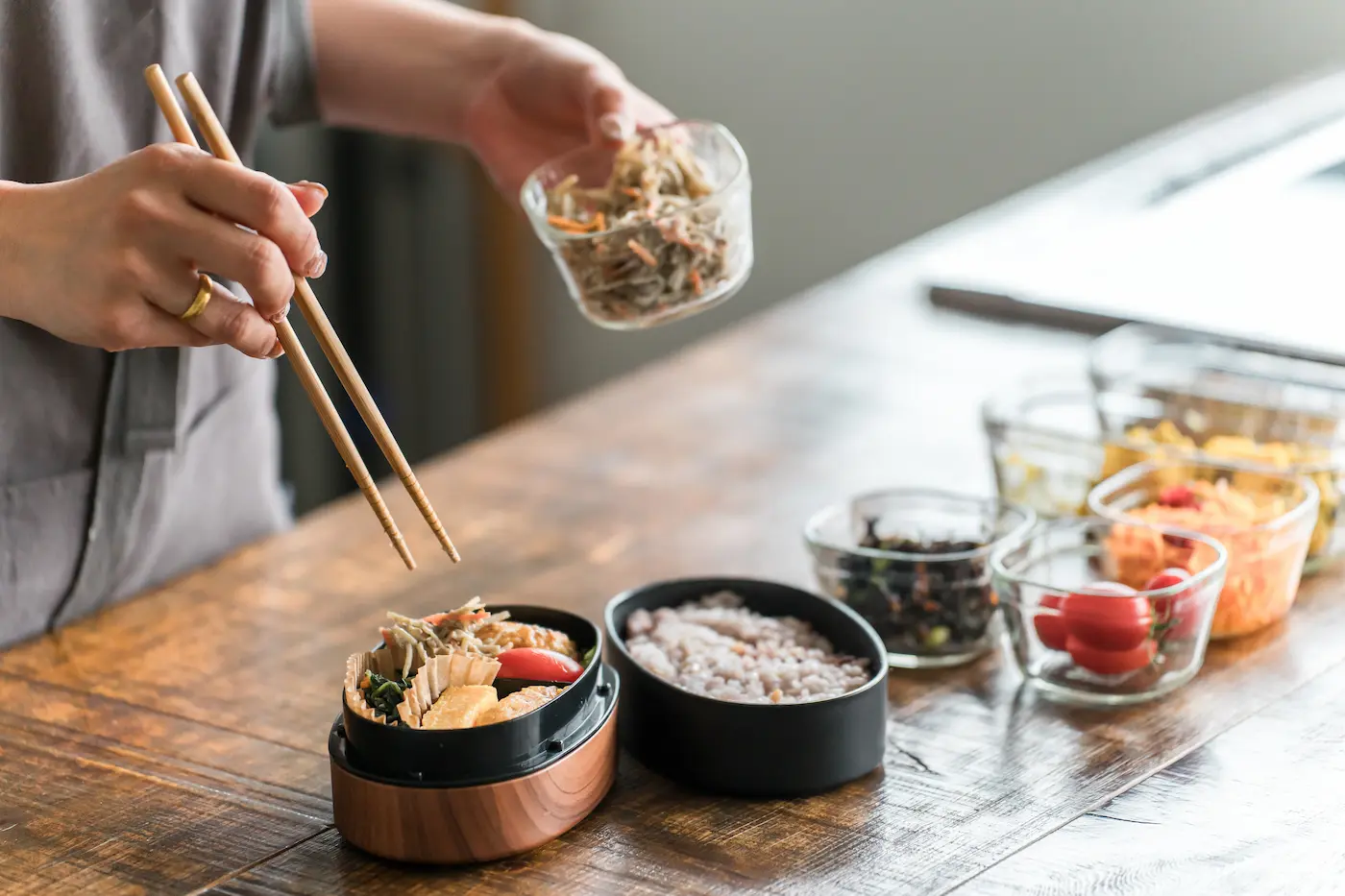
It is easy to assume that the risk of food poisoning is lower in winter than in summer due to the low outside temperatures, but you should not let your guard down.
Bacteria tend to proliferate in the temperature range of approximately 10°C to 65°C (50°F–149°F). Even in winter, keeping food in this zone for extended periods increases the risk of food poisoning. Thorough hygiene management is essential for eating safe lunches. Tiger Corporation advises consuming the food within 6 hours.
Here, we focus on the key points to watch out for when making winter lunches using standard (non-insulated) lunch boxes.
Do Not Pack Rice or Side Dishes While Hot
Be sure to let rice and side dishes cool down slightly before packing them.
If you close the lid while the food is still hot, the trapped steam will condense into water droplets on the ingredients and the inside of the container. This moisture creates an environment where bacteria can easily breed, increasing the risk of food poisoning. It can also cause the entire meal to become soggy and lose its flavor, so please wait until the steam has settled before packing.
Avoid Watery or Undercooked Side Dishes
Even in winter, dishes with high moisture content or those that are not fully cooked are unsuitable for bentos. Excess moisture promotes bacterial growth, while insufficient heating can lead to bacteria surviving from the cooking process.
To lower the risk of food poisoning, avoid the following items:
Examples of dishes to avoid in food jar
- Soft-boiled eggs
- Raw vegetables
- Dishes with liquid dressings (Aemono)
- Simmered dishes with lots of broth, etc.
Stir-fries and deep-fried foods that are cooked thoroughly are suitable for bentos. If packing dishes that tend to release moisture, take precautions such as draining the liquid well or thickening the sauce.
Be Careful with Indoor Storage Temperatures
Even in winter, it is important to store your lunch box in a cool place, avoiding heating equipment and direct sunlight. Even if cooked hygienically, food quality can deteriorate quickly in environments where bacteria thrive.
If your lunch box does not have thermal insulation, storing it in a refrigerator is ideal. If that is not possible, keep it in the coolest place available and use an ice pack to maintain a low temperature.
What Side Dishes Taste Good Even When Cold?
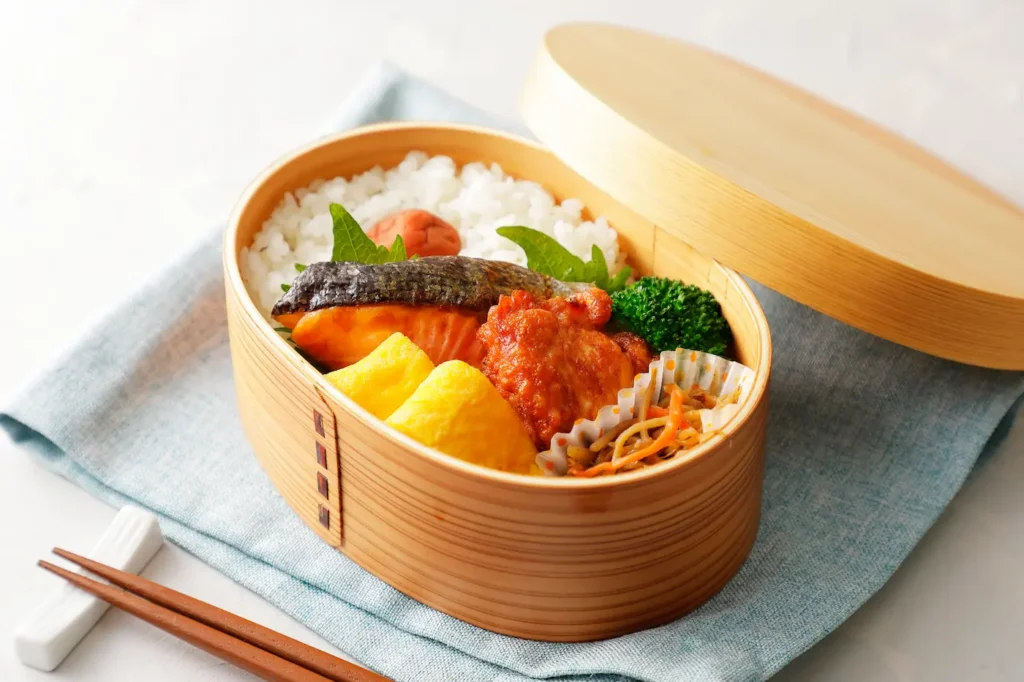
Since there is a gap between making and eating a bento, a key point when using standard lunch boxes is choosing side dishes that “taste good even when cold.” Here, we explain the characteristics of bento-friendly dishes that maintain both their deliciousness and safety when cooled.
Dishes with Little Liquid
The golden rule for making a delicious cold bento is to avoid watery side dishes. Moisture transferring to the rice not only makes it spoil faster but also ruins the texture of the dishes themselves.
Drier side dishes have the advantage of maintaining their flavor, appearance, and hygiene over time. Representative examples include:
Examples of dishes with little liquid:
- Fried chicken (Karaage)
- Japanese rolled omelet (Tamagoyaki)
- Sautéed burdock root (Kinpira Gobo)
- Grilled fish
- Deep-fried breaded items (Fry), etc.
When packing simmered dishes, boil down the liquid until it is almost gone. Using bento cups (especially silicone ones) can also minimize the transfer of any remaining liquid to other items.
Dishes with Stronger Seasoning
Bento side dishes are best seasoned slightly stronger than usual, assuming they will be eaten cold. Generally, people perceive flavors more strongly in warm food, while the sense of taste becomes less sensitive as food cools.
Japanese seasonings like soy sauce, mirin, and miso retain their flavor well even when cold. Ingredients with strong aromas like spices, garlic, and ginger are also helpful for increasing satisfaction.
Dishes with Texture
Chewy or crunchy side dishes are perfect for bentos because their texture is less likely to degrade when cooled. Increasing the number of times you chew also stimulates the brain, making it easier to feel full.
Here are some examples of textured dishes that boost bento satisfaction:
Examples of dishes with texture:
- Teriyaki chicken
- Grilled fish
- Ginger pork (Shogayaki)
- Simmered root vegetables, etc.
Why Does Bento Rice Get Hard?
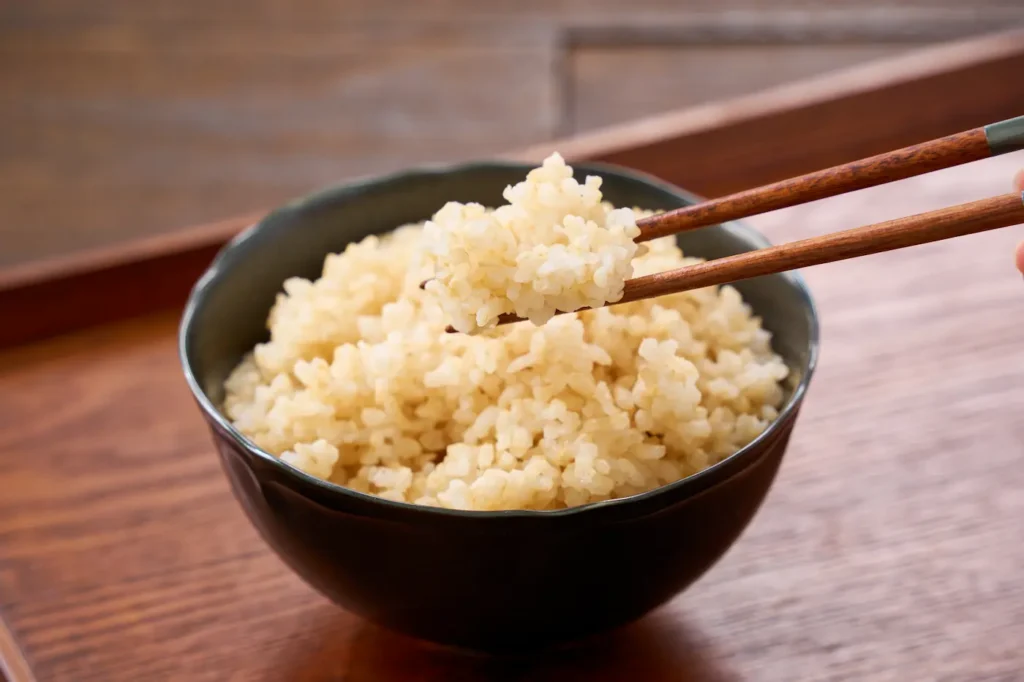
The main causes of bento rice becoming hard are “gelatinization” (alpha-starch) and the subsequent “retrogradation” (beta-starch) of starch.
During cooking, rice starch undergoes gelatinization with heat and water, becoming soft. However, over time, this gelatinized starch realigns and retrogrades; water leaves the starch molecules, and the structure hardens. As a result, the rice takes on a dry, crumbly texture.
Storing rice in the refrigerator accelerates retrogradation due to the low temperature, making the rice feel particularly hard.
Delicious Cold or Warm! Tips for Cooking Rice
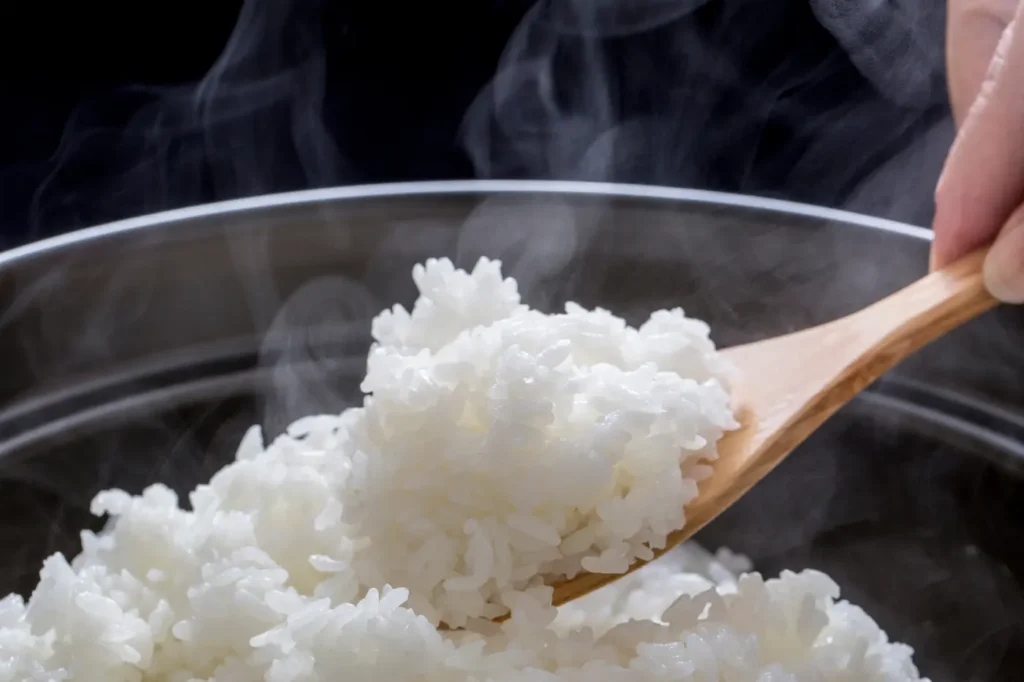
With just a few tweaks during cooking, you can make rice that tastes great even when cold. Here are some cooking tips useful for bento making.
Soak the Rice Thoroughly
Soaking rice thoroughly before cooking helps prevent it from hardening when cooled. This allows moisture to penetrate evenly to the core of the grain, ensuring the starch gelatinizes uniformly, which makes retrogradation (hardening) less likely to occur later.
Ideally, soak for at least 30 minutes. If the room temperature is high, soak the rice in the refrigerator to prevent bacterial growth.
Add a Little Vinegar or Oil
Adding a small amount of vinegar or oil when cooking is also recommended. Vinegar makes the rice fluffy and helps prevent spoilage. Oil coats the surface of the rice grains, helping to retain moisture.
Use about 1/2 teaspoon of vinegar per cup (1 go) of rice; the smell and sourness will be barely noticeable. For oil, just a few drops are enough—too much can cause stickiness or add excess calories.
Mix Well After Cooking
Mixing the rice thoroughly immediately after it finishes cooking prevents stickiness and retrogradation. Releasing excess steam trapped inside and distributing moisture evenly helps keep the rice from hardening when it cools. When mixing, scoop from the bottom and use a cutting motion.
Pack “Fluffily” into the Lunch Box
When filling the lunch box, pack the rice fluffily without pressing it down. To let excess steam escape, place the rice gently with a spoon and avoid pressing hard from the top.
Vacuum Insulated Lunch Boxes and Food Jars: Your Winter Essentials
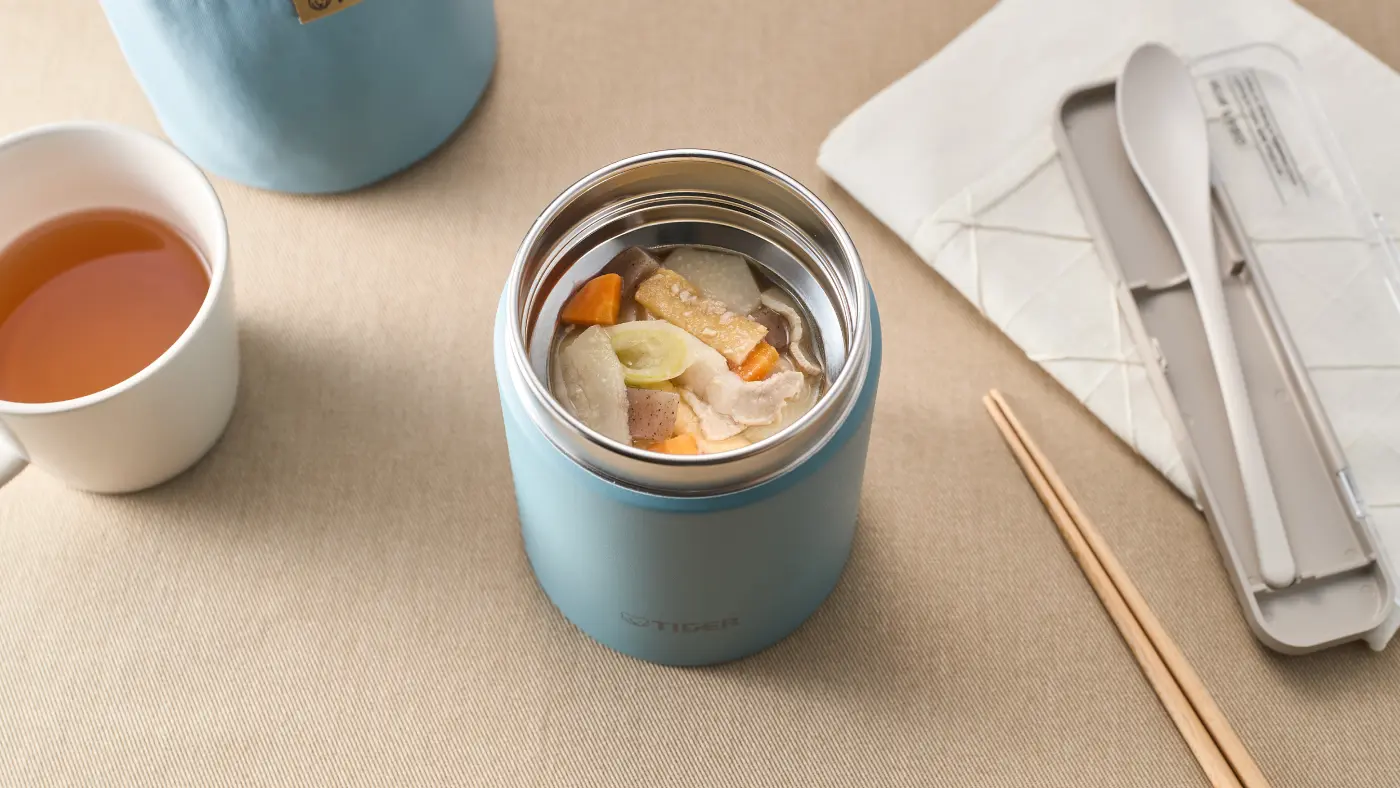
In the low temperatures of winter, food in standard lunch boxes cools down quickly. This is where thermal lunch gear comes in handy. Vacuum Insulated Lunch Boxes keep rice and side dishes warm separately, increasing overall meal satisfaction. Vacuum Insulated Food Jars maintain heat for a long time and are versatile enough for soups, stews, and risotto.
Tips for Using Vacuum Insulated Lunch Boxes and Food Jars
Vacuum Insulated Lunch Boxes and Food Jars cannot perform to their full potential if used incorrectly. Here are tips to maximize the container’s performance and keep your lunch warm.
Preheat Thoroughly
The biggest secret to keeping lunch warm in these containers is preheating. A cold container steals heat from the food, causing it to cool down.
Pour a small amount of boiling water into the container, close the lid, and let it sit for 1 to 2 minutes to preheat. Discard the water and wipe off the moisture before packing the food to enhance the heat retention effect.
Release Some Steam
After packing the food, let the steam escape for a few seconds to a minute before closing the lid. This simple step reduces the risk of the bento becoming soggy due to condensation or the lid becoming difficult to open due to internal pressure.
Do Not Put Cold and Hot Items in the Same Container
Avoid putting dishes with different temperatures, such as cold salad and hot side dishes, in the same container unit (unless they are in separate insulated compartments). They will transfer heat to each other, resulting in both being lukewarm. Always separate them into different containers and use non-insulated containers for cold items to maintain the deliciousness of each.
Carry in a High-Insulation Bag
In cold winter, even with high-performance containers, heat is slowly lost just by exposure to the outside air. To boost heat retention, carry your lunch in a bag with high insulation properties.
Filling gaps in the bag with a towel or similar item to reduce air pockets will further prevent heat from escaping.
Soups, curries, and stews will stay warm until you eat, greatly improving the quality of your lunch time.
Enjoy a Warm Lunch with High-Retention Food Jars | 5 Recommended Recipes
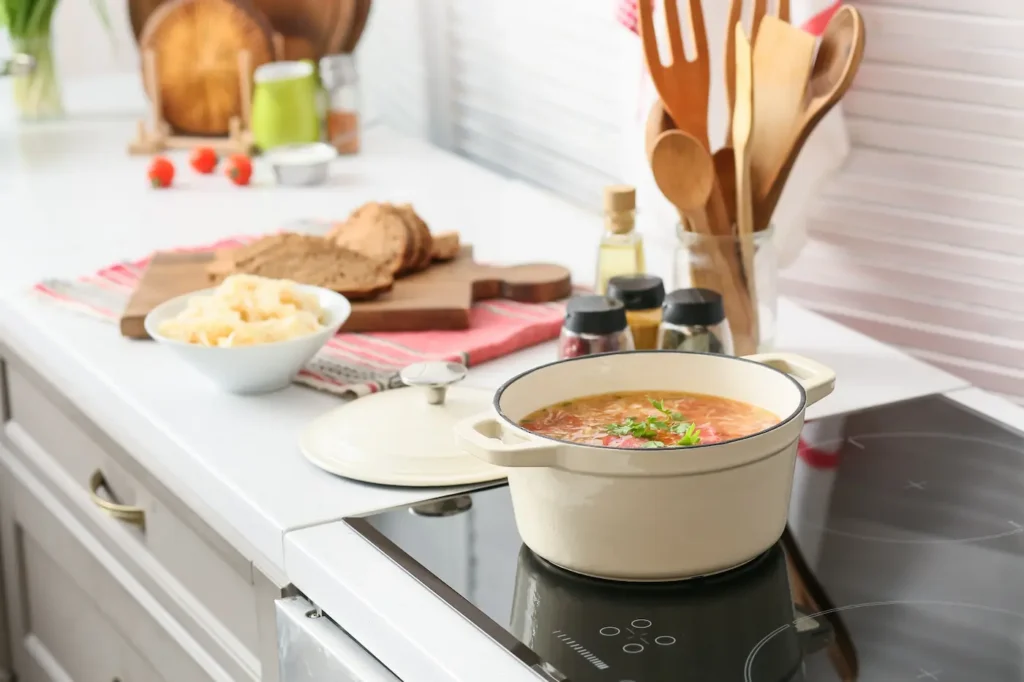
Here are 5 recommended recipes perfect for your Food Jar.
Chicken and Mushroom Arrbiata
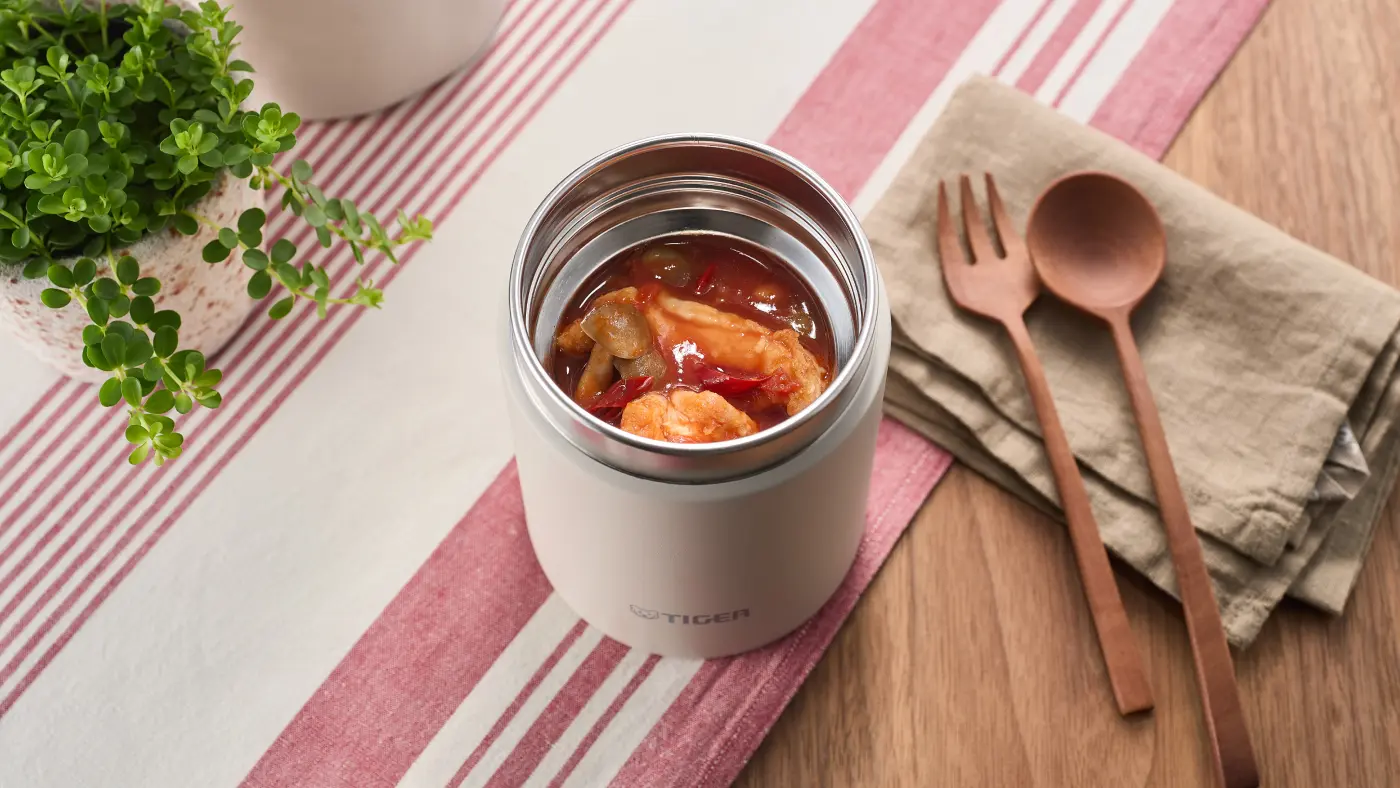
A perfect menu for winter that warms you from the inside out with the spicy kick of red chili peppers and the acidity of tomatoes. The juicy umami of chicken and the flavor of mushrooms blend together for a satisfying main dish. It is also recommended to enjoy it with bread or rice.
Vegetable-Packed Pot-au-feu
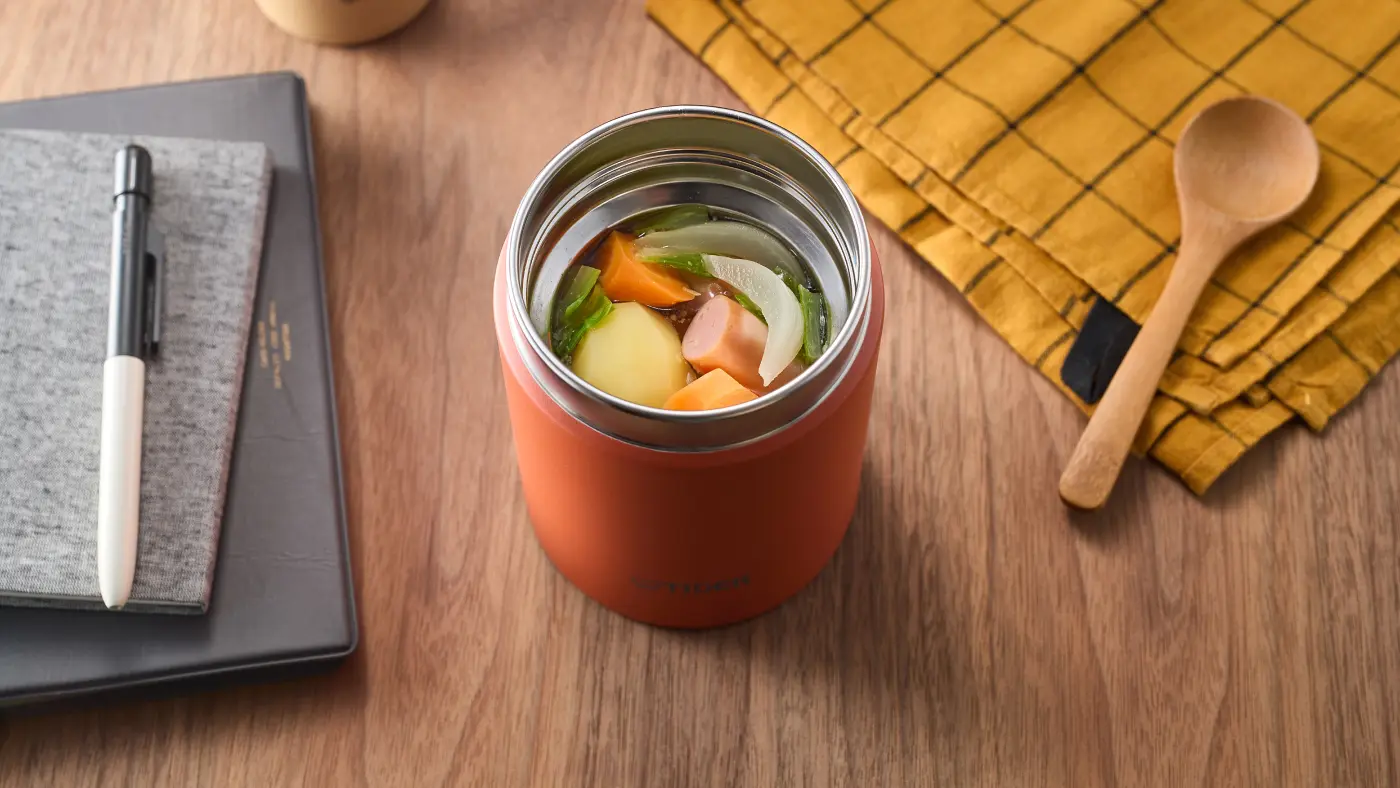
A hearty pot-au-feu using plenty of colorful vegetables like cabbage and carrots. The umami dissolved from the sausages spreads throughout the soup, creating a gentle yet satisfying taste. This feast of a soup that warms the body gently is perfect for a cold day’s lunch.
Microwave Mapo Tofu
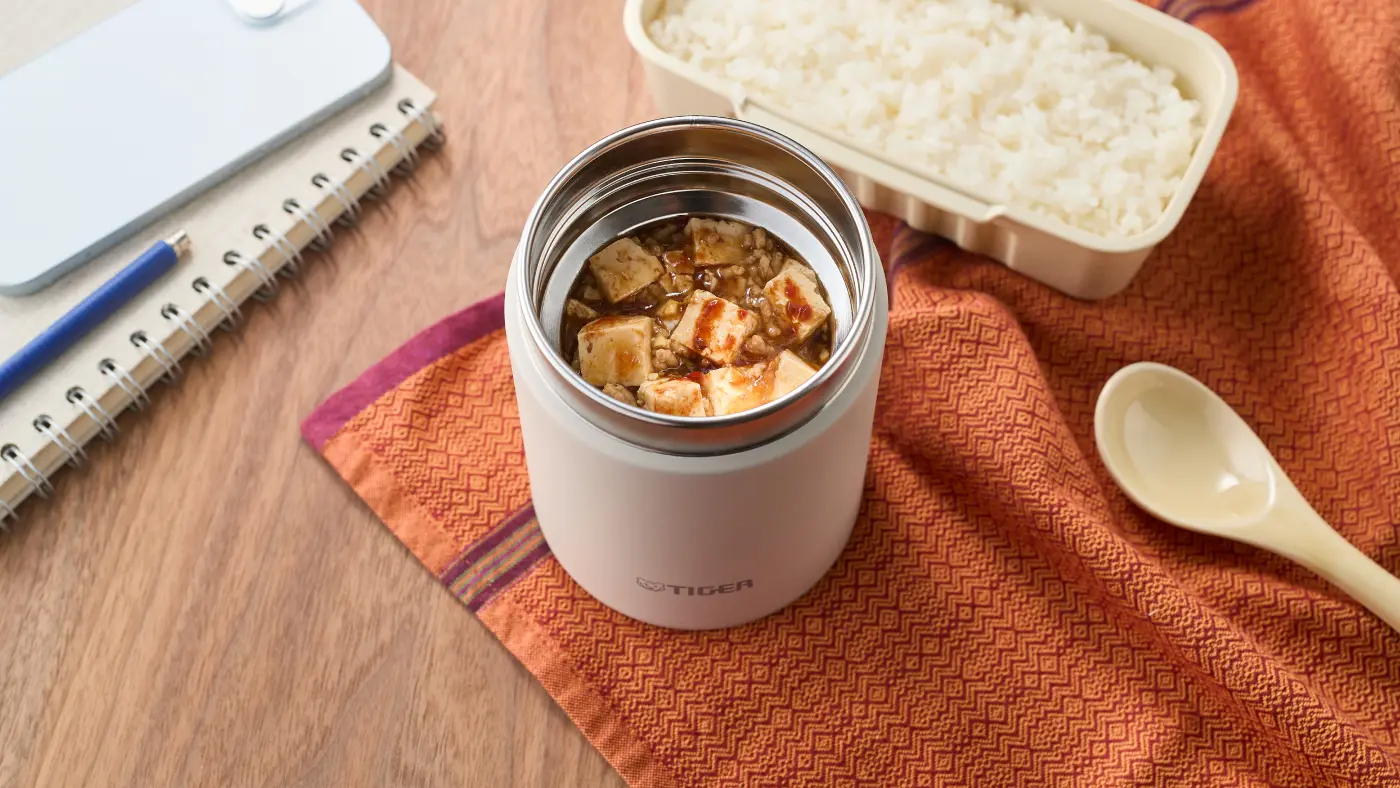
Mapo Tofu made only in the microwave without using fire. It requires little cooking effort and creates few dishes to wash, making it a welcome menu for busy mornings. The condensed spice and umami of Mapo Tofu are held in by the thick sauce, which helps retain heat; put it in a food jar, and it stays warm until lunch. It’s a dish that lets you enjoy authentic flavor easily and goes great with rice.
Plenty of Vegetables! Pork and Sake Lees Soup (Kasujiru)
A nutritious Kasujiru (Sake Lees Soup) packed with seasonal vegetables like Chinese cabbage and daikon radish alongside pork. The deep aroma of sake lees and the umami of pork blend together, resulting in an authentic flavor even when made in the microwave. With a food jar, you can taste it piping hot and enjoy a very satisfying Japanese lunch.
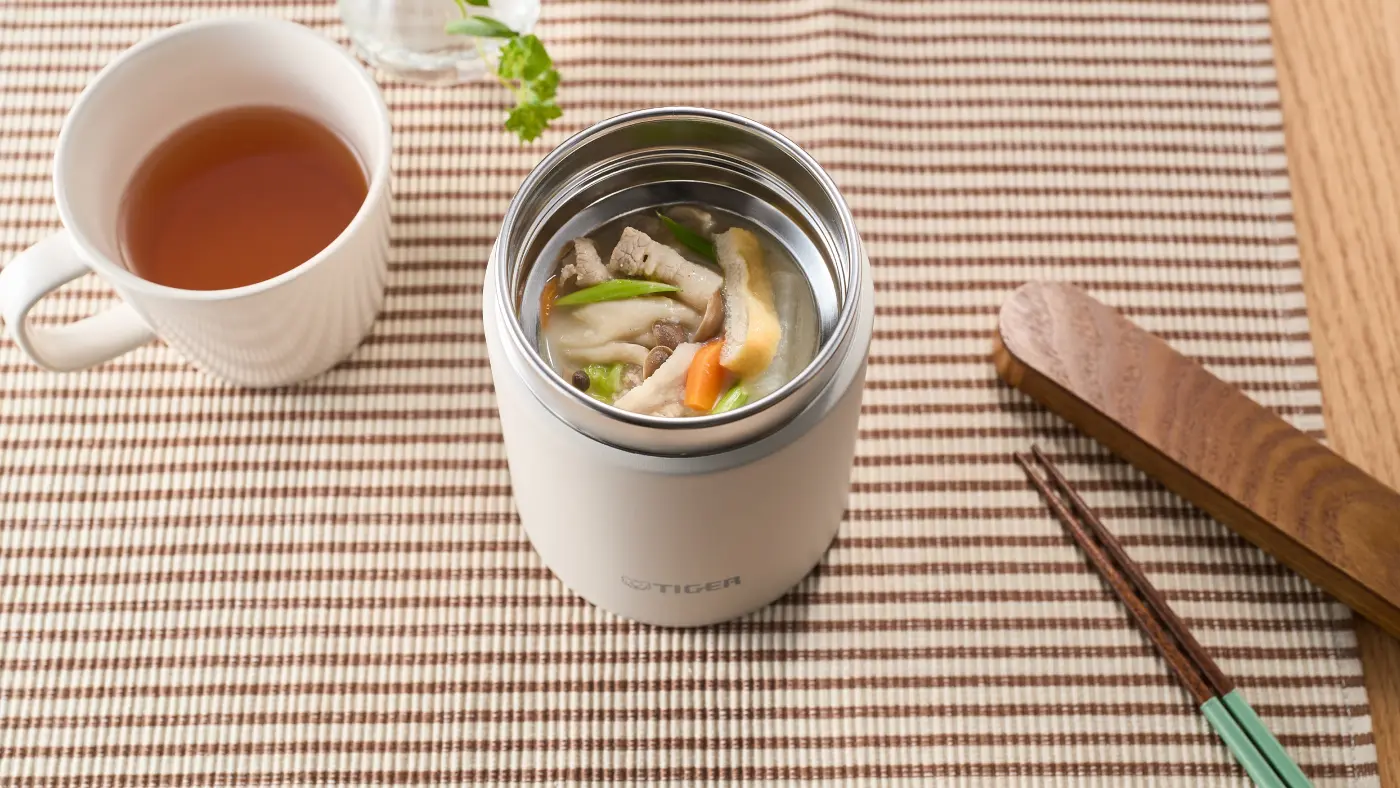
Hearty Pork Miso Soup (Tonjiru)
Tonjiru, with the melted umami of pork and root vegetables, is a classic menu item essential for Japanese winters. It is full of ingredients, filling, and has excellent nutritional balance. If you make a large amount in a pot, you can simply reheat it in the morning and pack it in a food jar. Highly recommended for lunch prep on busy days.
Enjoy Warm and Delicious Lunches All Winter Long
In winter lunch making, utilizing Vacuum Insulated Lunch Boxes and Food Jars allows you to enjoy warm meals. Let’s make safe and delicious lunches while paying attention to hygiene.

Food Jars
Vacuum Insulated Food Jars MKL-W040/W050/W075
From soup to side dishes and desserts, Available in three sizes.
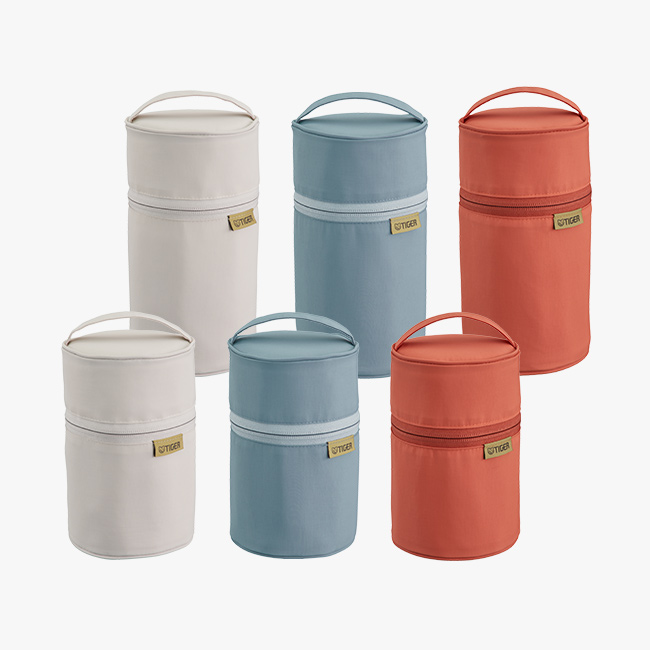
Food Jars
Food Jar Sling MKL-Z50P/Z75P
Specially designed pouch for the food jar that improves thermal insulation.