


We May Be Small, But We Are Not Powerless.” Rethinking Conflict-Free Minerals through the Issues in the Congo: An Interview with Akihiro Shima
The certified non-profit organization Terra Renaissance operates with the goal of realizing “a society where all life can live in safety (World Peace).” Overseas, they provide on-the-ground support for issues stemming from conflict minerals, such as landmines, small arms, and child soldiers. Domestically in Japan, they focus on awareness-raising activities centered on peace education.
For this issue, we interviewed Mr. Akihiro Shima, who manages public relations at Terra Renaissance. Mr. Shima, who resonates with the “Conflict-Free Minerals” initiative within Tiger Corporation’s sustainable policy “4 PLEDGES by TIGER,” spoke to us primarily about their support activities in the Democratic Republic of the Congo.
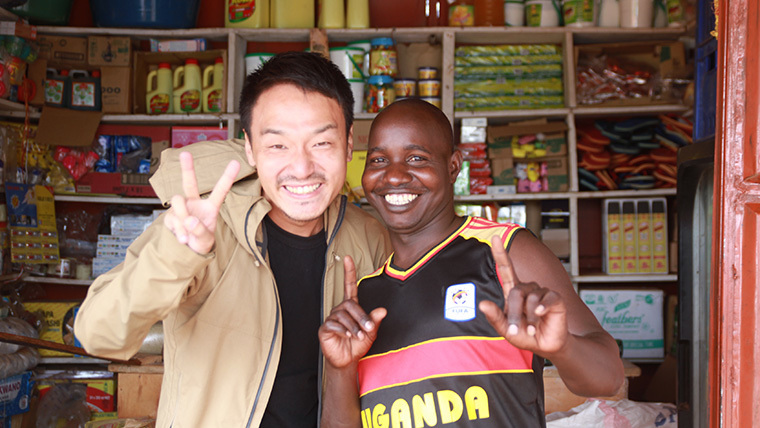
Table of Contents
Supporting “Independence” for Victims of Conflict
First, could you briefly tell us about Terra Renaissance’s activities?
One of our main ongoing activities is providing “support for independence” to victims of conflict. The issue of landmines is particularly serious, as they destroy the lives of those who fall victim to them. The same applies to the problem of “child soldiers” resulting from abduction or conscription.
Even if they are lucky enough to be released from the military, having spent years in combat means they have no vocational skills and have missed out on school education. To make matters worse, they are sometimes viewed as perpetrators in their own villages and towns.
We aim to create a situation where these conflict victims, who cannot survive on their own, can find happiness through their own power. Specifically, we support their independence by helping them acquire the ability to earn money through means such as vocational training. Currently, we have offices in Cambodia, Congo, Uganda, Burundi, and Laos, where we conduct direct support activities.
The Relationship Between the Democratic Republic of the Congo and Conflict Minerals
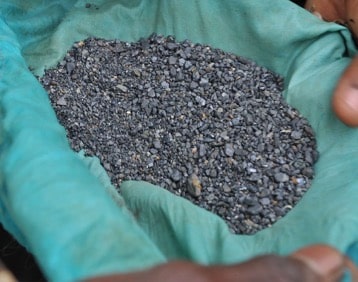
I understand that the issue of “conflict minerals,” such as the tantalum used in the computers and mobile phones familiar to us, is becoming serious in the Democratic Republic of the Congo. What exactly is the relationship between the Congo and conflict minerals?
The Democratic Republic of the Congo is a resource-rich location where abundant quantities of so-called “rare metals” like gold, diamonds, and tantalum are mined. When I visited for the first time three years ago, I was surprised by how vibrant the place was, overflowing with goods and people coming and going—so much so that I found myself wondering, “Is there really a conflict happening here?”
The conflict in the Congo is often referred to as a “civil war,” but in reality, most of it heavily involves neighboring nations and developed countries. It has become a site of international conflict. These conflicts are particularly concentrated in the eastern part of the Congo, which is rich in rare metals. The current reality is that various countries, including developed ones, are trying to seize control of these rare metals by force or steal the resources. A state of conflict has persisted for a long time, and a cumulative total of about 5.4 million people have lost their lives.
“Child Labor,” “Child Soldiers,” and “Sexual Violence” — Problems Faced by Conflict Victims
So, you mean that various issues regarding conflict minerals are emerging from this situation. Could you briefly explain these problems?
One is the issue of “child labor,” where children are forced to work as laborers to mine rare metals. The other is the issue of “child soldiers,” where children are conscripted into the conflicts I explained earlier.
Regarding child soldiers, sometimes children are kidnapped and forced into service, and sometimes they volunteer. From our perspective, you might think, “Why would anyone volunteer?” However, although being a soldier means having to kill people, it also means being able to eat—to survive. In other words, the reality is that they are forced to participate due to poverty.
Another issue is that the Congo is a country where the position of women is overwhelmingly weak. Due to the influence of the conflict, villages are attacked and sexual violence occurs. This is not done out of human desire, but as a means to rule the village through terror.
Poverty Lies at the Root of Support for Independence
Specifically, what kind of independence support do you provide to these conflict victims?
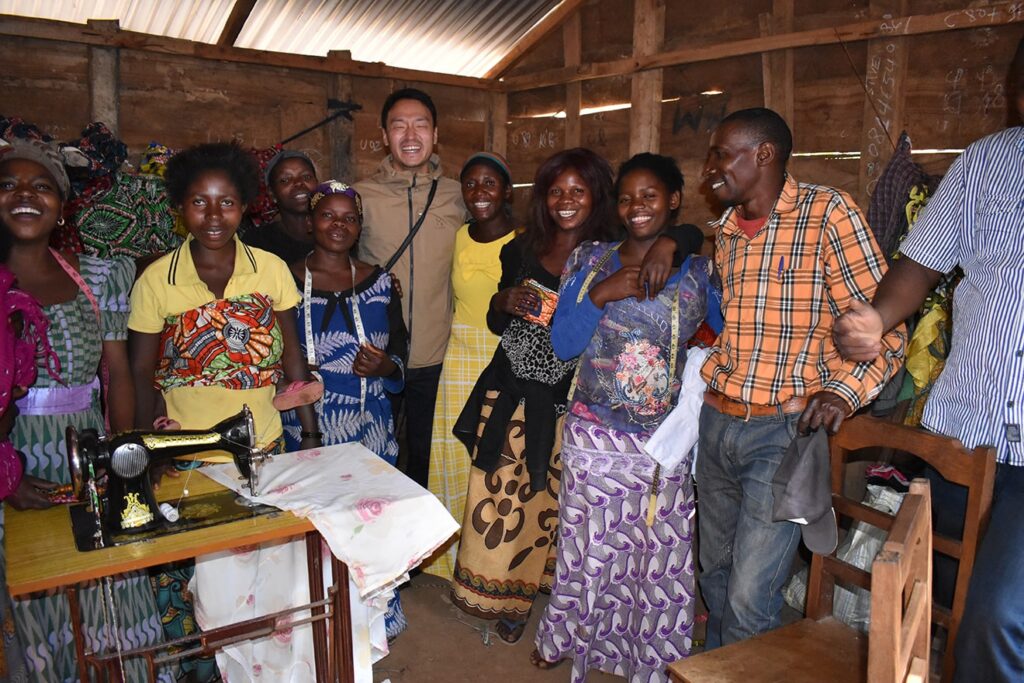
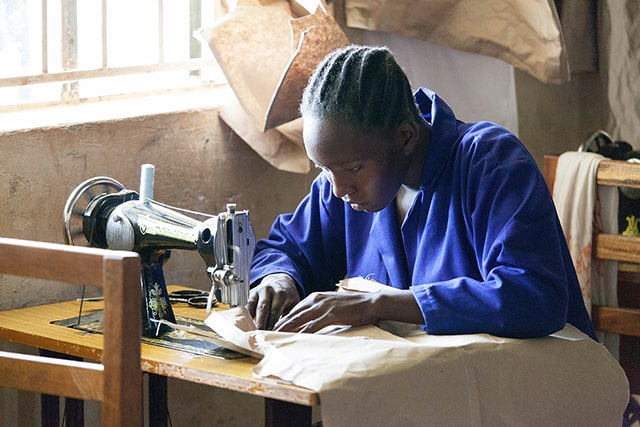
For women who have suffered sexual violence during the conflict, we provide vocational training to acquire dressmaking skills. By working with their hands toward the goal of opening their own business, these women regain their will to live.
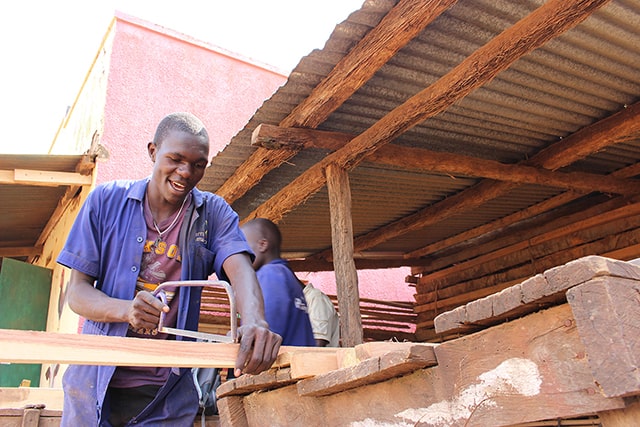
We also engage in vocational training for former child soldiers so they can reintegrate into society. By acquiring skills and creating a situation where they are needed by those around them, we aim to reduce the perception of them as “perpetrators” and resolve communication issues with their communities.
Being needed by someone raises self-esteem. The joy of making someone smile and being useful through their work heals their wounded hearts.
The root of these issues is poverty. If households themselves become prosperous, children can avoid volunteering to become soldiers, and women who have suffered sexual violence will no longer be treated as beings to be hurt and oppressed in conflicts. We are also working on activities that focus on these fundamental areas.
Awareness Through Action: Changing Consumption Behavior
Did your state of mind or behavior change after actually visiting the region?
A former child soldier, a boy of about 12 or 13, said to me, “If everyone becomes rich, the war will end.” It left a lasting impression on me that children essentially understand how much poverty and the gap between rich and poor influence conflict.
I also became conscious of the fact that the suffering of the local people is connected to our own lives.
As Terra Renaissance, we put effort into activities that convey the current situation to raise awareness, and my sense of this issue intensified. However, we cannot do anything alone. My desire to resolve their situation, even a little, by involving other organizations, companies, and countries to change consciousness has grown stronger.
Is there anything individuals can do to tackle these problems? Also, please tell us if there is anything you are personally working on.
For example, the raw material for mobile phones and computers contains tantalum, a conflict mineral. The key is to “think about that consumption behavior.” I personally make a conscious effort to avoid using products that contain conflict minerals in their raw materials as much as possible.
I think this aligns with the philosophy regarding “Conflict-Free Minerals” found in Tiger Corporation’s sustainable policy, “4 PLEDGES by TIGER.” As a consumer, I believe choosing products from companies that disclose information starting from resource procurement is very meaningful.
“We May Be Small, But We Are Not Powerless.” — That Small Power Lies in Daily Life
What impression did you have of Tiger Corporation’s sustainable policy, “4 PLEDGES by TIGER”?
I resonated with the “4 PLEDGES by TIGER” initiative itself because it is very close to everyday life.
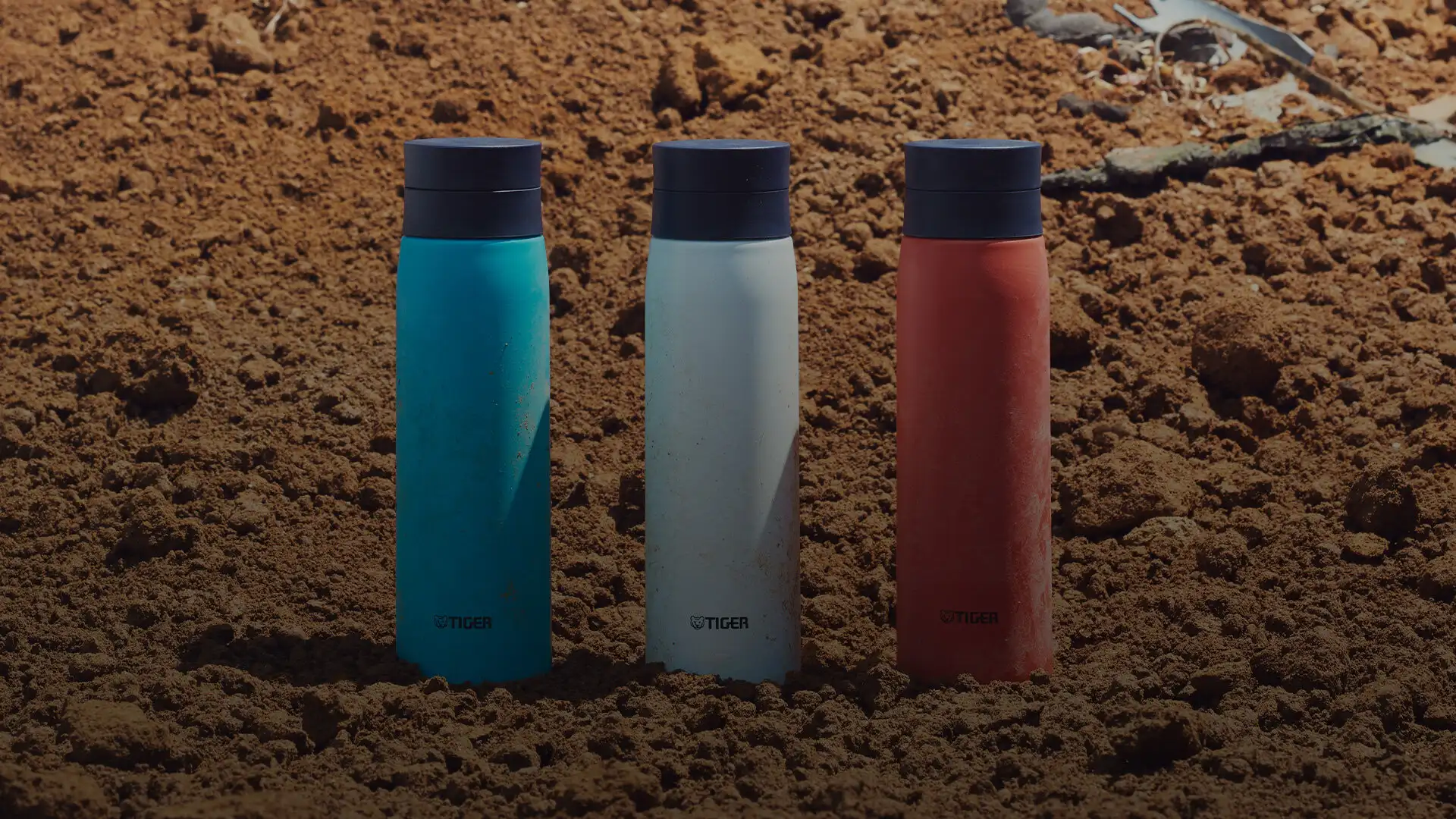
There is a phrase that Terra Renaissance cherishes: “We may be small, but we are not powerless.” The idea is that while what one person can do is very small, if those small powers come together, they become a great force. If you ask where that small power is located—it is hidden in our casual daily lives.
I believe that if we can draw out that “small part” found in daily life by using Tiger bottles and express it through action, this society will change.
Thank you. Finally, could you tell us about your future outlook?
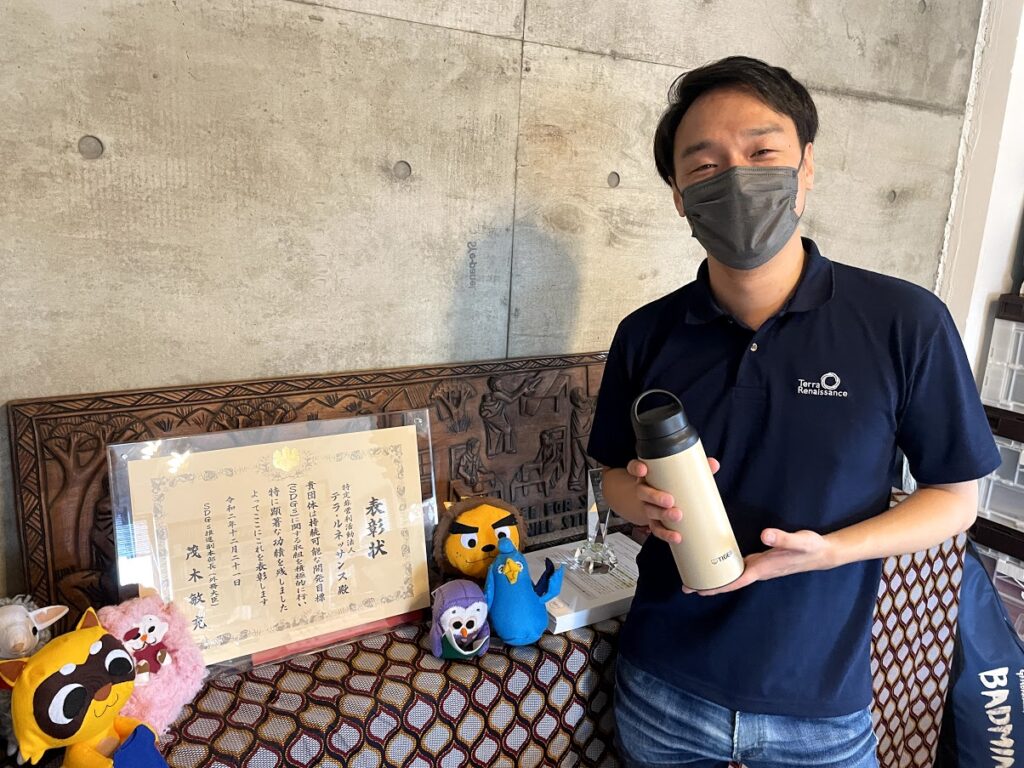
Since joining Terra Renaissance and tackling the issue of conflict minerals, what I have personally felt is that “there is no one who is unrelated.”
If there is someone in front of me who thinks, “It has nothing to do with me,” I want to change that “irrelevant” to “relevant.” If we can change the direction of interest and increase the number of people who see it as their own issue, surely we can eliminate war from the world.
Both Terra Renaissance’s activities and my own personal desire are the same: “To eliminate war from the world.” I believe this will not change in the future.
Profile
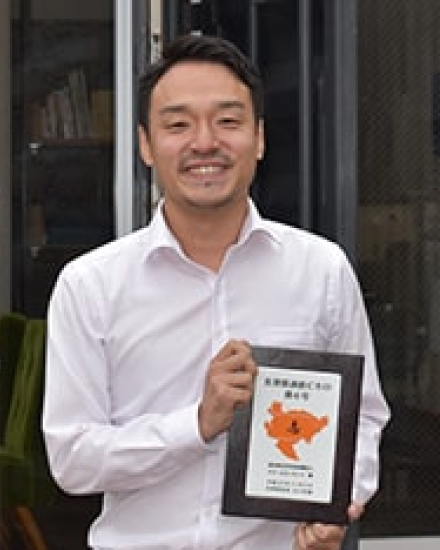
Akihiro Shima / Akihiro Shima
Born in Kyoto in 1989. Completed his master’s degree at the Graduate School of International Cooperation Studies (GSICS), Kobe University. While researching African conflicts in graduate school, he conducted surveys on peace education in Kenya. After working in web marketing at a travel agency, he joined Terra Renaissance in October 2017. He manages online public relations and fundraising while also coordinating awareness activities in the Kyushu region as a staff member of the Saga office, which opened in November 2017. Currently based in the Kyoto secretariat, he is active as the Online Marketing Manager for the Awareness Division and Manager of the Saga operations.
Photos courtesy of Terra Renaissance