


The Story Behind “Takitate”: The “Freshly Cooked” Device That Couldn’t Cook at First
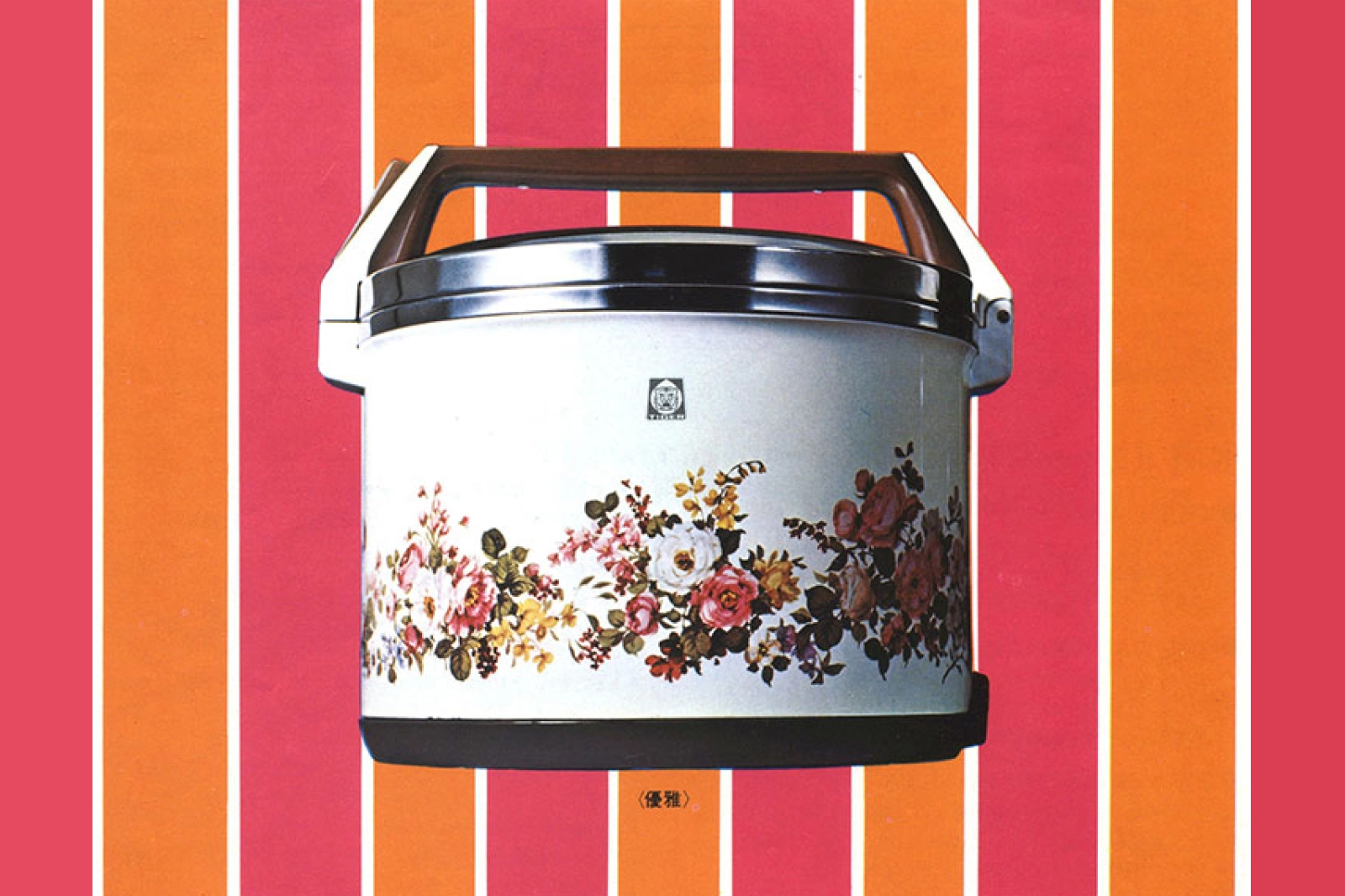
Hello from the TIGER MAGAZINE editorial team.
Let me ask you a quick question: have you taken a close look at the rice cooker in your home recently? If it’s a Tiger Corporation product, you’ll surely find the “Takitate” logo somewhere on it.
“Well, of course,” you might say. “Tiger rice cookers are synonymous with ‘Takitate’.” “It’s a machine for cooking rice, so isn’t that obvious?”
That’s what you’d think, right? I thought so, too. But as I was unraveling Tiger’s 100-year history, I stumbled upon a surprising fact that made me exclaim, “Is that so?!”Today, I’d like to share the somewhat unexpected roots of “Takitate” and the heartwarming story behind it.
Table of Contents
The First Generation Actually “Couldn’t Cook Rice”
Let’s turn back the clock about 60 years to the 1960s. Back then, keeping rice warm meant using a glass-lined vacuum jar.
However, the glass jars had their limits. If the temperature dropped to around 40 degrees Celsius, the rice would develop a peculiar odor or, in the worst cases, spoil.
Amidst this, in September 1970—the year Japan was buzzing with excitement over the Osaka Expo—Tiger Corporation launched a revolutionary new product driven by the desire to “do something about this problem.”
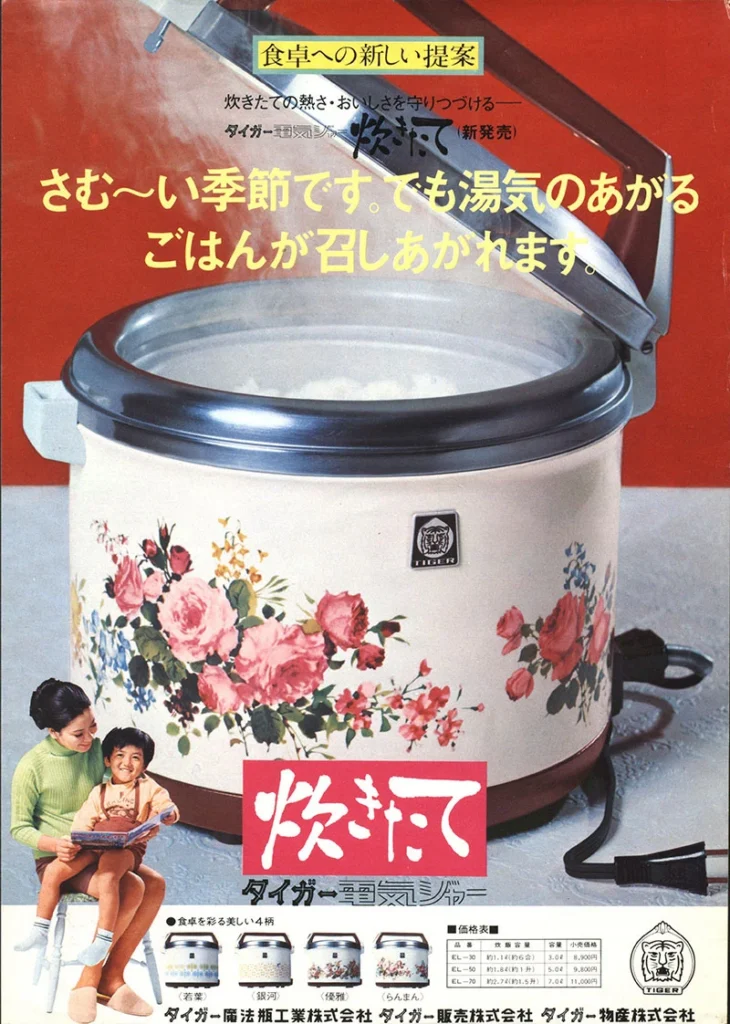
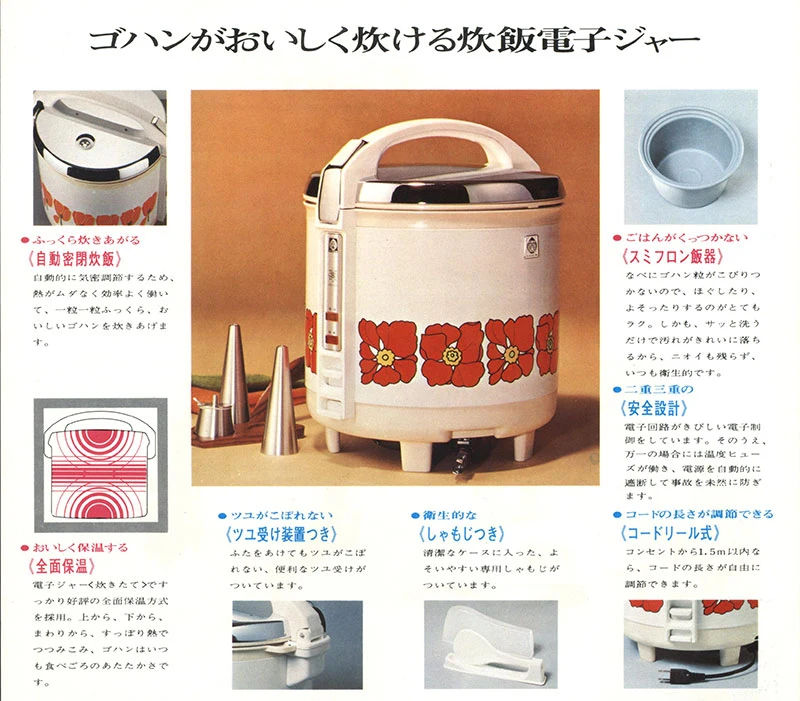
Its name was the Electric Rice Warmer “Takitate.”
…Did you notice? It wasn’t a “Rice Cooker,” but an “Electric Rice Warmer” (Electronic Jar). That’s right—the commemorative first-generation “Takitate” was a container dedicated solely to keeping rice warm, with no cooking function at all.
“Wait, even though it was named ‘Takitate’ (meaning ‘Freshly Cooked’)?” It sounds contradictory, doesn’t it?
Today, it’s a given that “cooking” and “keeping warm” come as a set, but technologically, they were separate functions at the time. So, why was it named “Takitate” when it couldn’t cook?The reason lies in the pressing dining table circumstances of that era.
The Magic Box That Changed “Cold Rice”
In the dining scene of the Showa era, it was common to cook rice “all at once in the morning.” You could eat piping hot rice in the morning, but by night, the rice kept in the ohitsu (wooden rice container) would become cold and hard.
“By the time Dad comes home, the rice is stone cold…” “It’s especially unappetizing in winter…”
These were common worries of the time. “I want to feed my family, who come home tired from work, steaming hot rice.” Born from such wishes of mothers back then, and the rice cooker manufacturer’s desire to “spread family togetherness at the dining table,” the “Electric Rice Warmer” was created to keep rice hot using the power of electricity.
In other words, the name was chosen to embody the wish: “To provide the warmth and deliciousness of ‘freshly cooked’ rice at any time.”
Starting a Lap Behind
The first model, the EL type, was revolutionary: “No smell! No spoiling!” However, the development team looked grim. Why? Because rival manufacturers had already released more advanced “Electronic (Semiconductor) Jars” in the market.
To be honest, Tiger had fallen behind right out of the gate. But Tiger had one weapon that no other company could beat: the “vacuum insulation technology” honed since the days of glass jars.
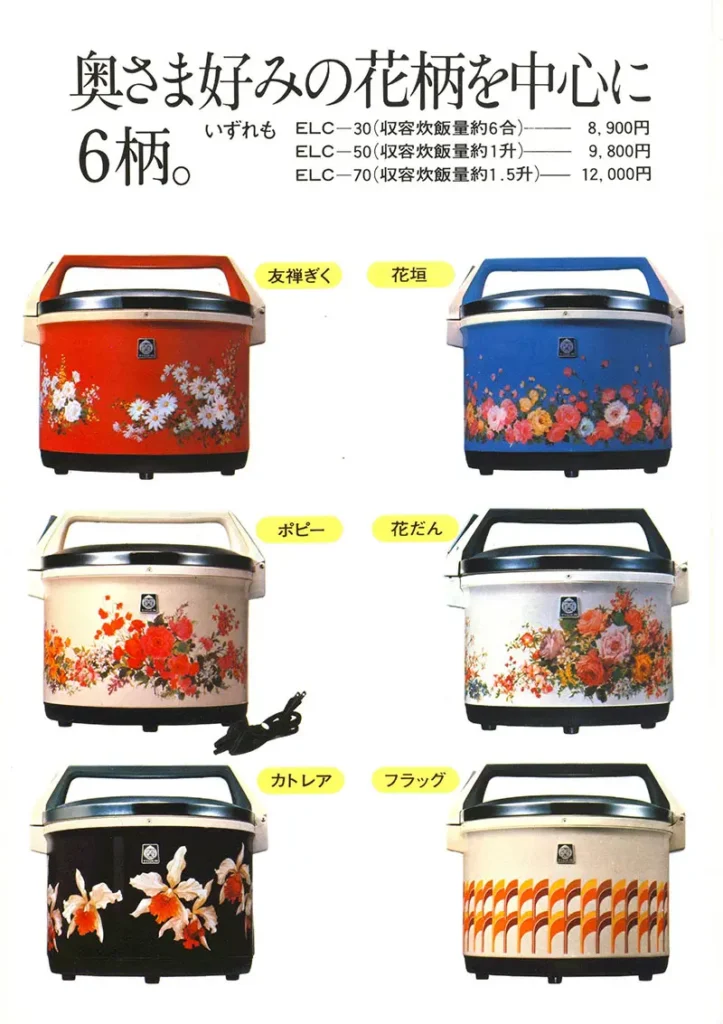
“Semiconductor control” x “Tiger’s traditional insulation technology.” When these two meshed perfectly in June 1971, the Electric Rice Warmer “Takitate” ELC model was finally completed. This was just nine months after the first EL model. Without this fierce comeback, the current “Takitate” brand might not exist today.
The Magic of the “Floral Pattern” Wanted by 270,000 People
This ELC model left behind another legend. It happened when we placed a newspaper ad seeking “1,000 monitors.”
Amazingly, we received a flood of 270,000 applications from all over the country. 270,000 people for just 1,000 spots. You can see how hungry people were for “warm rice” back then, and how much they anticipated this new home appliance.
The Obsession with “Warmth” That Lives On
Saved by the President’s Wife’s Comment: The “Grey Rice” Incident
The following year, 1972, saw the debut of the DFC model, which adopted “fluorine coating” (non-stick processing)—now a standard feature in rice cookers.
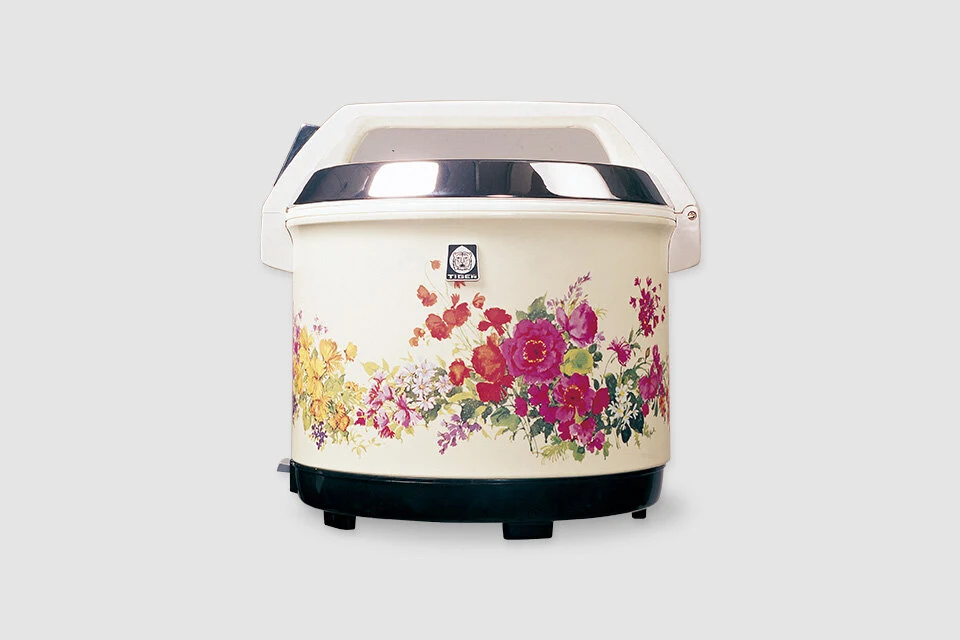
But during development, there was a huge dispute within the company. “If we use fluorine coating, the inner pot will turn grey. That makes the rice look unappetizing!” The person who cut through this argument was Yoko Kikuchi, the wife of the then-president.
“It is better that the rice doesn’t stick.”
This realistic comment from a housewife who stood in the kitchen every day became the deciding factor for commercialization. As a result, it received great acclaim from customers and became a massive hit. Without this authoritative voice, we might still be fighting with dried-up rice stuck to our inner pots today.
Later, in 1974, the “Rice Cooker & Warmer Takitate” finally appeared, docking “cooking” and “keeping warm” functions together. Here, the modern style of “cook and keep warm” was completed in both name and reality.
Knowing this history, the latest rice cooker right in front of me starts to look a little different.
Rice cooks with the push of a button and stays warm for hours. This convenience we enjoy as a matter of course might be built upon a relay of “love” that hasn’t changed for 50 years—the desire to “feed someone warm rice.”
Who Will You Share a Meal With Today?
The obsession of engineers, the expectations of 270,000 people, and the intuition of the president’s wife. When I think that the rice cooker in front of me arrived after a relay of so many people’s desire to “feed someone warm rice,” the steam rising from it looks even more precious than usual.
In our busy daily lives, we may not always be able to gather the whole family around the dining table. At such times, if you see the “Keep Warm” lamp on the rice cooker glowing softly, please remember: it’s not just a mechanical light, but a message from the maker saying, “Welcome home, there is warm rice waiting for you.”
Writing this has made me hungry, so I think I’ll go cook some rice. With my beloved “Takitate,” of course.
May your rice today be filled with steam and smiles.
Profile
TIGER MAGAZINE Editorial Team
The TIGER MAGAZINE Editorial Team. We deliver heartwarming stories and tips to enrich your daily life.