How Long Do Water Bottles Last? Key Signs It’s Time to Replace Yours and Tips for Long-Term Care
How long does a water bottle actually last?
Recognizing signs of wear helps you maintain peak insulation and hygiene. Learn when to replace your bottle and key tips to extend its lifespan.
Table of Contents
Signs Your Water Bottle Has Reached Its Lifespan and When to Replace It
In reality, a water bottle body doesn’t come with a strict, predetermined expiration date; its actual lifespan varies significantly depending on how you use and maintain it. However, as a water bottle nears the end of its functional life, noticeable changes appear in both its physical appearance and thermal performance. Knowing these specific warning signs helps you evaluate the right time to invest in a fresh replacement.
Decline in Heat and Cold Retention
If your water bottle no longer keeps drinks as piping hot or ice-cold as it did when you first bought it, it is time to consider a replacement. A vacuum insulated bottle body features a double-wall structure consisting of an inner and an outer flask. By creating a sealed vacuum layer between these two stainless steel walls, heat transfer is blocked, preventing your beverage from turning lukewarm.
However, if contact rust develops or physical impacts fracture the body or welded seams, the airtight vacuum layer is permanently compromised. When thermal energy transfers directly to the outer wall, heat escapes rapidly.
You can easily test your bottle’s thermal insulation using boiling water: fill the bottle with freshly boiled water and touch the middle to lower section of the outer body after about 5 minutes. If the exterior feels hot to the touch, it is a clear sign that the vacuum insulation performance has failed.
Noticeable Dents or Damage on the Bottle Body
Suffering major dents or visible structural damage on the exterior body is another clear sign that your bottle has reached the end of its life. While modern bottles are engineered for high durability, dropping the flask during daily use or subjecting it to heavy impacts during travel can cause physical denting.
Outer dents frequently breach or compress the internal vacuum gap, leading directly to a loss of insulation performance. Furthermore, structural cracks or fractures can trigger leaks and interior rust. If your bottle can no longer be used safely, it is best to shop for a replacement.
Interior Scratches or Contact Rust (Pitting)
Developing noticeable rust spots or deep scratches on the interior walls is a major indicator that your bottle needs replacing. Deep scratches or contact rust on the inner lining not only act as a breeding ground for bacteria and organic grime, but they can also cause metallic components to leach into your drink. Because this severely impacts hygiene and taste, replace your bottle if interior rust or scratches become severe.
Changes in Beverage Taste or Aroma
Experiencing an unexpected change in the flavor or scent of your drink is often caused by stubborn grime trapped in resin components, such as silicone gaskets. When organic residues build up on rubber seals, mold growth and odor absorption occur, ruining the natural flavor profile of your beverage. Always make it a habit to disassemble all removable parts after every use and clean every nook and cranny.
Condensation Forming on the Exterior Surface (For Vacuum Insulated Models)
If condensation (sweating) begins forming on the outer surface of a vacuum insulated bottle, it is a definitive sign that the bottle has reached the end of its lifespan. Physical damage or internal failure breaks the vacuum seal, allowing temperature differentials to produce exterior moisture drops. Because this indicates that thermal retention has degraded, it is the ideal time to consider a replacement.
Resin Parts Have an Average Lifespan of One Year
While the stainless steel body carries no strict expiration date, resin components—such as silicone gaskets and stoppers—are consumable parts. To maintain a leak-proof seal over long-term use, replacing these small parts periodically is essential. Degraded or hardened gaskets are the primary cause of messy liquid leaks during travel.
Because wear and tear progress differently depending on usage frequency, inspect your gaskets regularly. If you notice cracking, stiffness, or severe discoloration, replace the resin parts regardless of how long you have owned them.
Furthermore, if installing brand-new replacement gaskets fails to stop a leak, the bottle body itself has likely warped or degraded, meaning it is time to invest in a new bottle.
Check the Retention Period for Performance Parts for Repair
Most reputable manufacturers supply “performance parts for repair” so consumers can easily purchase replacement stoppers and gaskets when original parts wear out.
To ensure prompt customer support in case of product issues, manufacturers establish specific retention periods for these spare components. For stainless steel water bottles, the industry standard for retaining performance parts for repair is typically around 5 years after product discontinuation. Once this retention period ends, procuring replacement parts for repairs becomes impossible.
Notably, Tiger Corporation is committed to long-term parts retention to promote sustainability. For eligible products discontinued after May 30, 2019, Tiger retains consumable parts and offers paid repair services for up to 10 years after production ends, allowing you to cherish and use your favorite product for as long as possible.
Maintenance Tips to Keep Your Water Bottle Lasting Longer
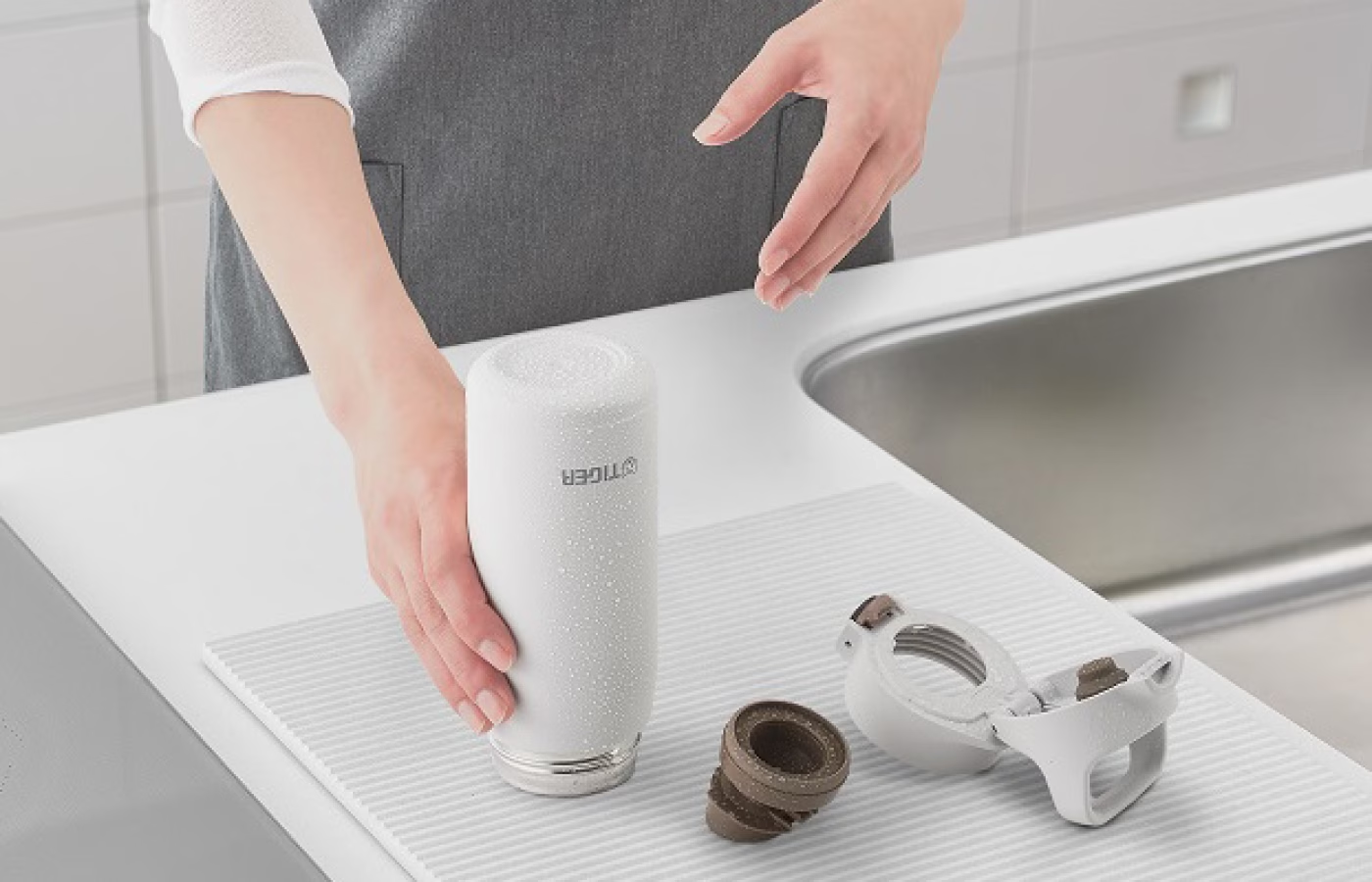
Neglecting water bottle maintenance encourages bacterial colonization and foul odors, leading to the rapid degradation of both the bottle body and its silicone parts. To keep your favorite bottle fresh and functional for years, follow these correct daily care routines.
Wash Immediately After Use
Never leave a used water bottle sitting unwashed; clean it as soon as you finish your drink. Allowing a bottle to sit unwashed gives leftover beverage residues time to feed bacteria and mold, causing rapid colonization.
Before washing, disassemble every removable section and scrub thoroughly using standard neutral dish soap and a soft sponge. Use a micro-brush to clean narrow crevices in lids and mouthpieces, and rely on a long-handled bottle brush to scrub the deep interior bottom with ease.
If you are away from home and cannot wash your bottle immediately, empty any leftover liquids and give the interior a quick rinse with fresh water. Wash it thoroughly with soap as soon as you return home.
Rinse Thoroughly and Dry Completely
After scrubbing every component, rinse copiously under running water to ensure zero soap residue remains. Rinsing with warm or hot water is highly recommended, as warm metal allows moisture to evaporate much faster than cold water.
When drying, stand the bottle upside down at a slight angle on a drying rack so convective air can circulate freely through the opening for rapid, complete drying.
Use Dishwashers and Dryers Only for Compatible Models
As a general rule, standard water bottles must never be placed inside a dishwasher or dish dryer. The extreme heat generated inside dishwashers deforms silicone gaskets and causes exterior paint to peel. To prevent leaks and warped lids, never run non-compatible models through a machine.
Even if a bottle is labeled dishwasher-safe, review your product manual carefully before washing, as certain models specify that “only the bottle body” or “only the lid assembly” is machine-safe.
Replace Consumable Parts Periodically
Even if the main bottle body shows zero signs of wear, consumable parts like silicone gaskets naturally degrade over time. Continuing to use worn gaskets compromises the airtight seal, leading to lid tightness issues, leaks, and persistent odors.
While exact timing varies by manufacturer guidelines and usage frequency, replacing silicone gaskets once a year is a great rule of thumb. If you spot cracks, warping, or a loss of rubber elasticity, replace them with fresh parts immediately.
Bad Habits That Shorten Your Water Bottle’s Lifespan

Even among bottles that look identical at a glance, internal materials and specialized coatings vary by model. Consequently, everyday handling habits that seem harmless can inadvertently shorten your bottle’s overall lifespan. To protect your investment, avoid these common mistakes that cause premature degradation.
Using Chlorine Bleach or Abrasive Scrubbers
Never use chlorine-based bleach or abrasive scrubbers when removing stubborn stains from your bottle. Sodium hypochlorite—the active chemical in chlorine bleach—aggressively breaks down the protective oxide film on the stainless steel interior, triggering severe rust and chemical pitting. It also damages delicate silicone gaskets, drastically shortening your bottle’s functional life.
Additionally, scrubbing the interior with metal scouring pads or stiff nylon brushes creates microscopic scratches across the metal lining, creating ideal sanctuaries for contact rust and mold to take root. Internal scratching also degrades long-term vacuum insulation performance.
Always follow your model’s instruction manual and scrub gently using a soft, non-abrasive sponge.
Packing Liquids You Should Avoid
Water bottles are not designed to hold every type of liquid. Depending on the beverage’s chemical properties, certain liquids can corrode the internal stainless steel, or build up intense internal gas pressure that damages components and jams the lid shut.
Before using a new bottle, check your instruction manual to see which beverages to avoid.
| Liquid Type | Why It’s Dangerous |
| Dry Ice & Carbonated Drinks (Unless using a dedicated carbonated bottle) | Expanding carbon dioxide gas spikes internal pressure, which can jam the lid shut, cause violent eruptions, or damage components. |
| Milk, Dairy Beverages, & Fresh Juices | Highly perishable liquids spoil rapidly, producing foul odors and high gas pressure. |
| Salty Liquids (Miso Soup, Soups, etc.) | High sodium concentrations cause internal stainless steel corrosion and rust. |
| Loose Tea Leaves & Fruit Pulp | Particles clog the pouring valves and seals, causing liquid leaks. |
Subjecting the Bottle to Strong Physical Impacts
Avoid dropping your water bottle or knocking it against hard surfaces. Heavy physical impacts deform the outer shell, which can fracture the delicate internal vacuum insulation layer and compromise thermal retention. Even if the exterior looks fine after a fall, internal thermal performance may be permanently degraded, making gentle daily handling essential.
Care for Your Water Bottle Mindfully and Replace It When the Time Comes
While a water bottle body carries no rigid expiration date, its materials and performance naturally degrade with long-term daily use. Even if the exterior looks unchanged, subtle signs—like declining heat retention or altered beverage taste—indicate it is time for a fresh start. By practicing gentle daily care and inspecting your bottle regularly, you can enjoy peak performance and know exactly when it’s time to upgrade!