[Vacuum Bottle Evolution!?] Innovating From Giant Logistics Containers to Future Smartphone Communications
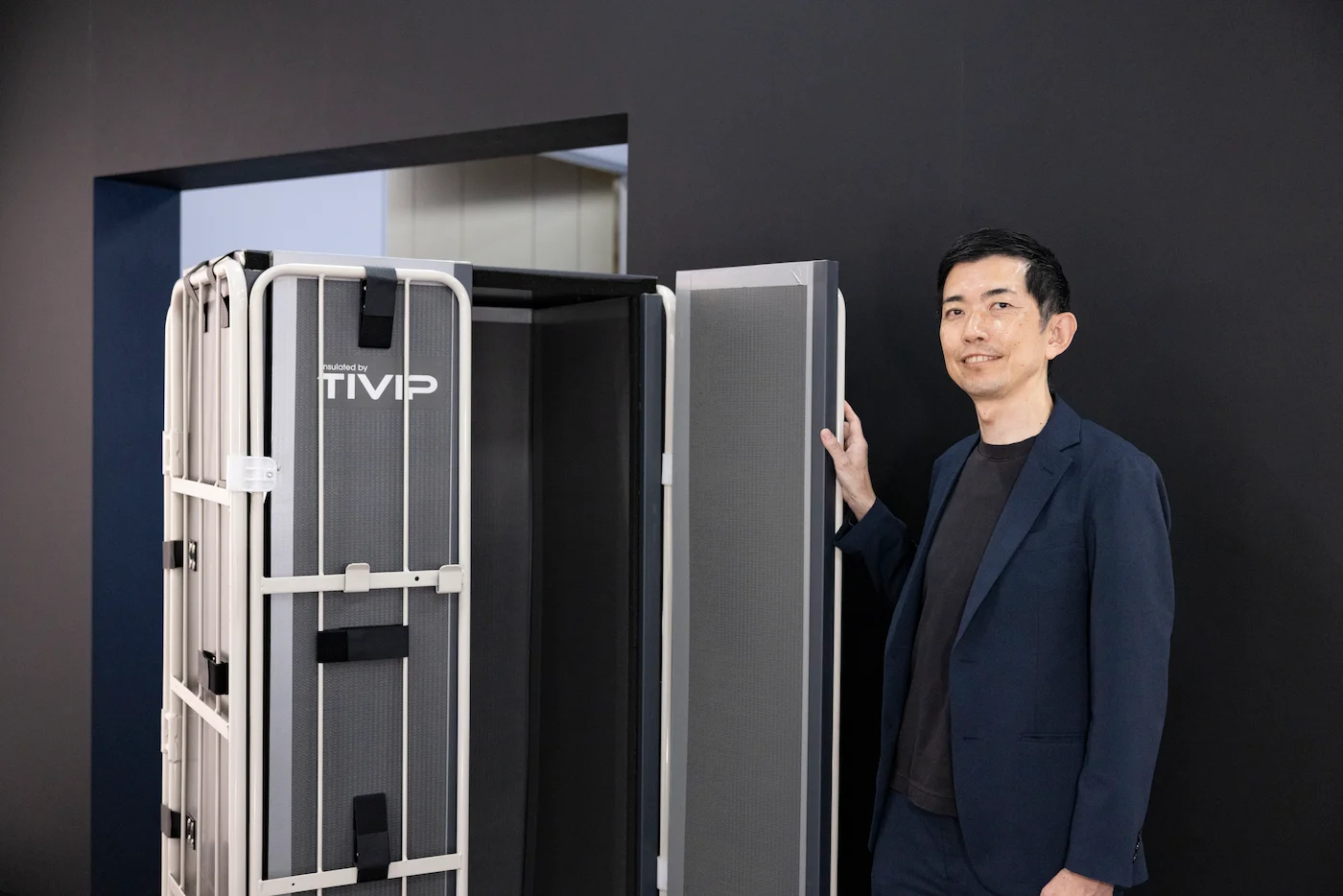
Recently, we’ve had more opportunities to buy cold food and refrigerated daily necessities online. Behind the scenes, delivering these items perfectly chilled—even on scorching summer days—requires immense, unseen efforts in the logistics field.
Did you know that Tiger’s technology is currently drawing major attention in this very logistics sector? Tiger’s vacuum insulation technology has evolved into “thin, flat stainless steel panels,” supporting the cold chain for giant containers and revolutionizing logistics. Its name is “TIVIP.”
In this article, we sat down with Norihito Minamimura, General Manager of the R&D Marketing Group and leader of the Vacuum Insulation Panel Project, to hear about the untold struggles of its development and his challenges for the future.
Table of Contents
Vacuum Bottles Gone Flat!? “TIVIP” Supporting the Logistics Industry
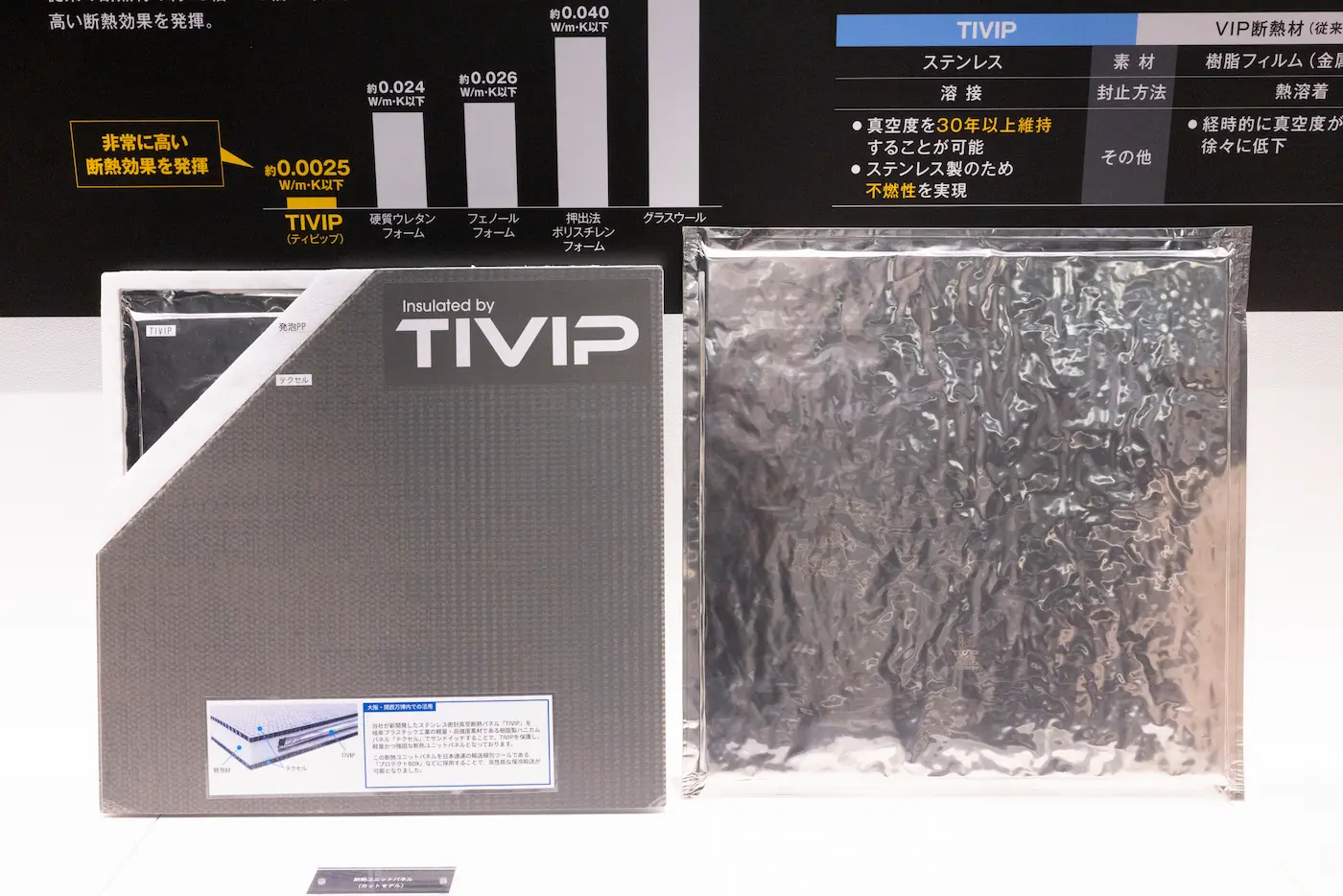
Actually, we have received numerous requests from customers and businesses over the years asking, “Can you use vacuum bottle technology to create square boxes or flat panels?”
Do you know why water bottles are round? When the space inside the double-wall structure is vacuum-sealed, the pressure difference between the vacuum and the outside creates a strong inward force. To withstand this pressure and maintain structural integrity, the bottle needed to be a “round cylindrical shape,” which is the most resistant to deformation.
Therefore, TIVIP incorporates a “core material” sandwiched inside the panel, allowing it to maintain its shape even as a flat board. However, the real hardship lay beyond that.
The biggest struggle was the thinness of the stainless steel and the welding process.
The stainless steel plates used for water bottles are typically 0.3 to 0.5 mm thick, but TIVIP uses ultra-thin stainless steel foil measuring just 0.05 mm—about 1/10th the thickness, as thin as a human hair. We aimed for extreme weight reduction for use in logistics, but because it is so incredibly thin, even a slight instability in the welding heat would instantly melt a hole through it.
People inside and outside the company tended to think, “You already make stainless steel bottles, so it should be easy.” However, we couldn’t use any of our existing bottle manufacturing equipment. We had to develop both the facilities and the technology entirely from scratch. Through countless trials and errors, it took us five years to develop our proprietary processing technology.
Born from these grueling efforts, TIVIP is a new “vacuum insulation panel” that delivers overwhelming insulation performance—roughly 10 to 20 times that of conventional materials like glass wool or urethane foam—while also boasting a long lifespan.
Keeping Summer Containers Chilled: “A 45.9% Reduction”
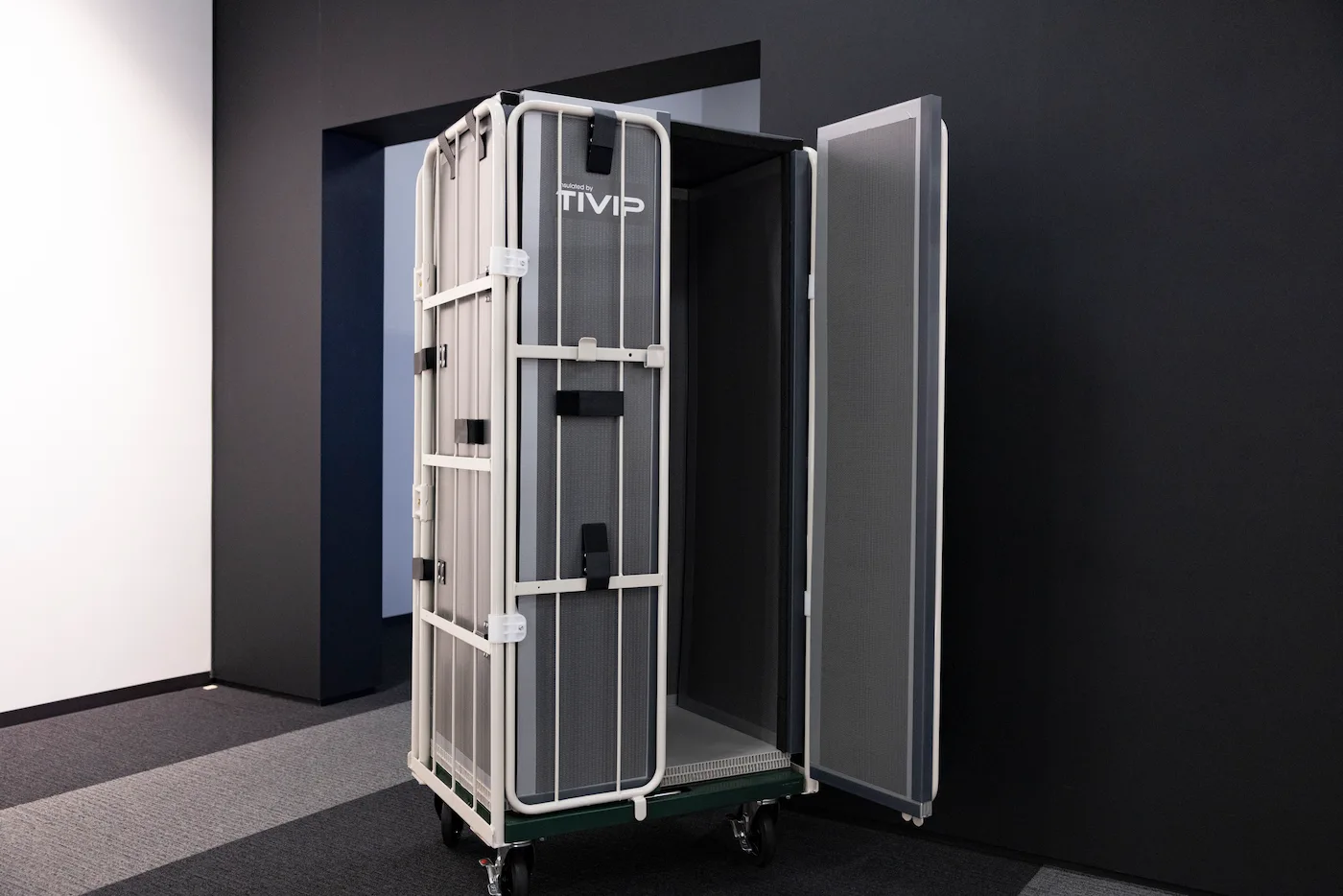
Using TIVIP, we conducted a demonstration test with a large reefer container under the harsh midsummer conditions of an average temperature of 32°C (89.6°F). The results proved that we could reduce both the refrigerator’s power consumption and CO2 emissions by an impressive 45.9% (*Based on our internal cold retention test comparing conventional products).
Currently, one application drawing particularly massive response from logistics companies is its use in “mixed-load transportation.”
By utilizing cold storage boxes made with TIVIP, a single truck can simultaneously transport “room-temperature items,” “refrigerated goods,” and “frozen cargo” (mixed loading). Since there is no longer a need to run separate trucks for different temperature zones, we believe this offers a massive solution to the “2024 logistics problem,” soaring fuel costs, and the need to reduce CO2 emissions.
During the Expo 2025 Osaka, Kansai, demonstration tests using TIVIP cold storage boxes were conducted to transport refrigerated and frozen food into the venue. As a developer, I was thrilled to see that it reduced the fear of food spoiling in the extreme heat, and significantly alleviated the work-related stress, such as the “rush and anxiety,” felt by workers on the delivery frontlines.
Furthermore, with the recent progression of global warming, summer temperatures no longer fall within what was once considered “room temperature.” As a result, there are increasing issues with goods that were previously shipped at room temperature becoming spoiled or deformed. We believe TIVIP transport boxes can be highly effective in these situations as well.
The Shape May Change, but the “Dedication to Preserving Temperature” Remains the Same
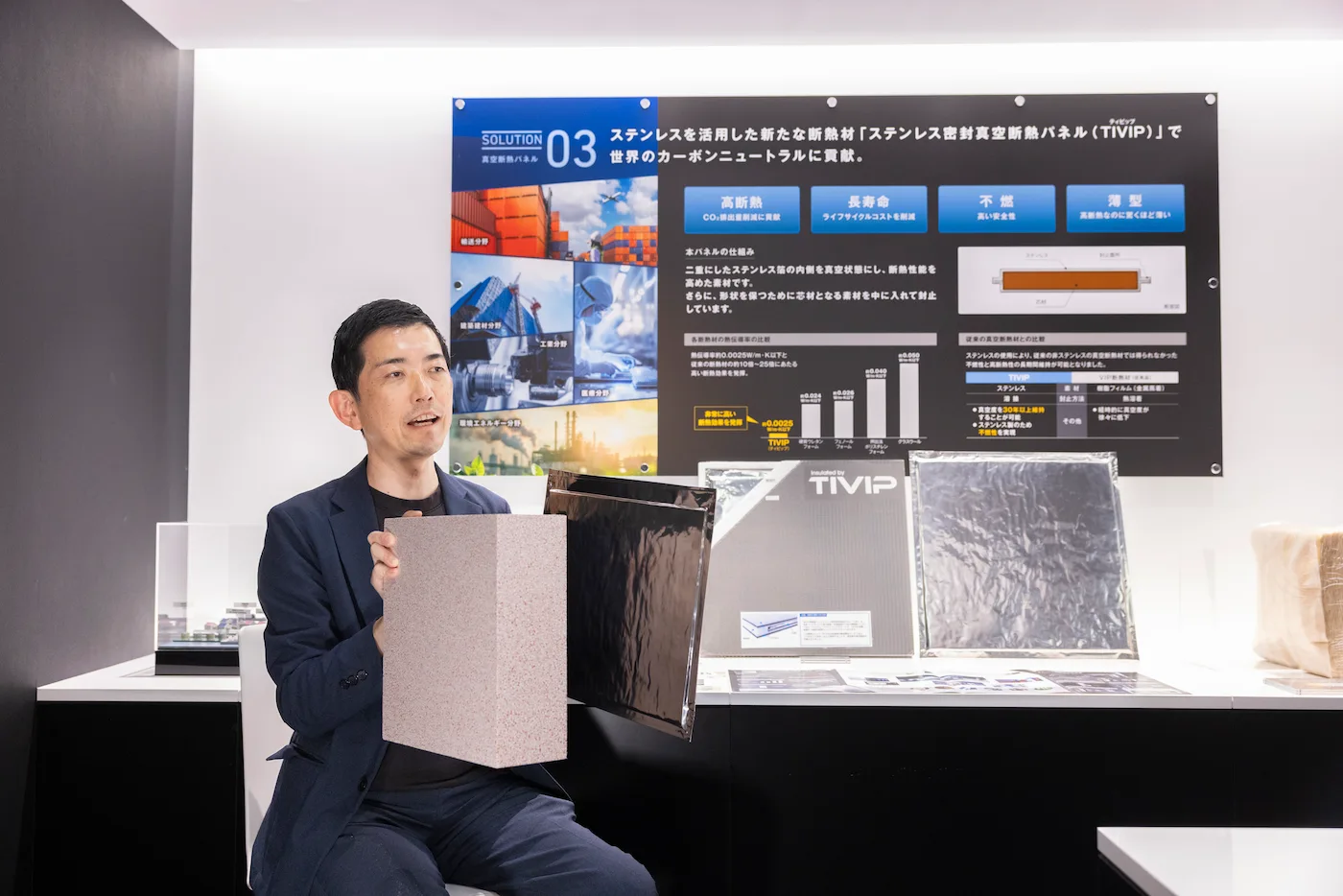
Some cooler boxes and refrigerators on the market already utilize VIP (Vacuum Insulation Panel) technology. However, we believe that conventional VIPs face challenges regarding long-term durability due to their materials and sealing methods.
In contrast, Tiger’s TIVIP features a robust “complete stainless steel seal.” With stainless steel materials sealed via metal welding, we anticipate a long lifespan of over 30 years. In terms of panel strength, it boasts the toughness to withstand the intense impacts of cargo handling in the logistics field.
Even though the shape and application have shifted from a round water bottle to a flat panel, our core “temperature control technology,” cultivated over a century, remains entirely unchanged.
Delivering a warm beverage to a family dining table and protecting the safety of precious food in the logistics field share the exact same essence. Our dedication as engineers to “protecting what matters most at the optimal temperature” is densely packed inside this unseen panel.
From Logistics to the Behind-the-Scenes of Future “Smartphone Connectivity”!
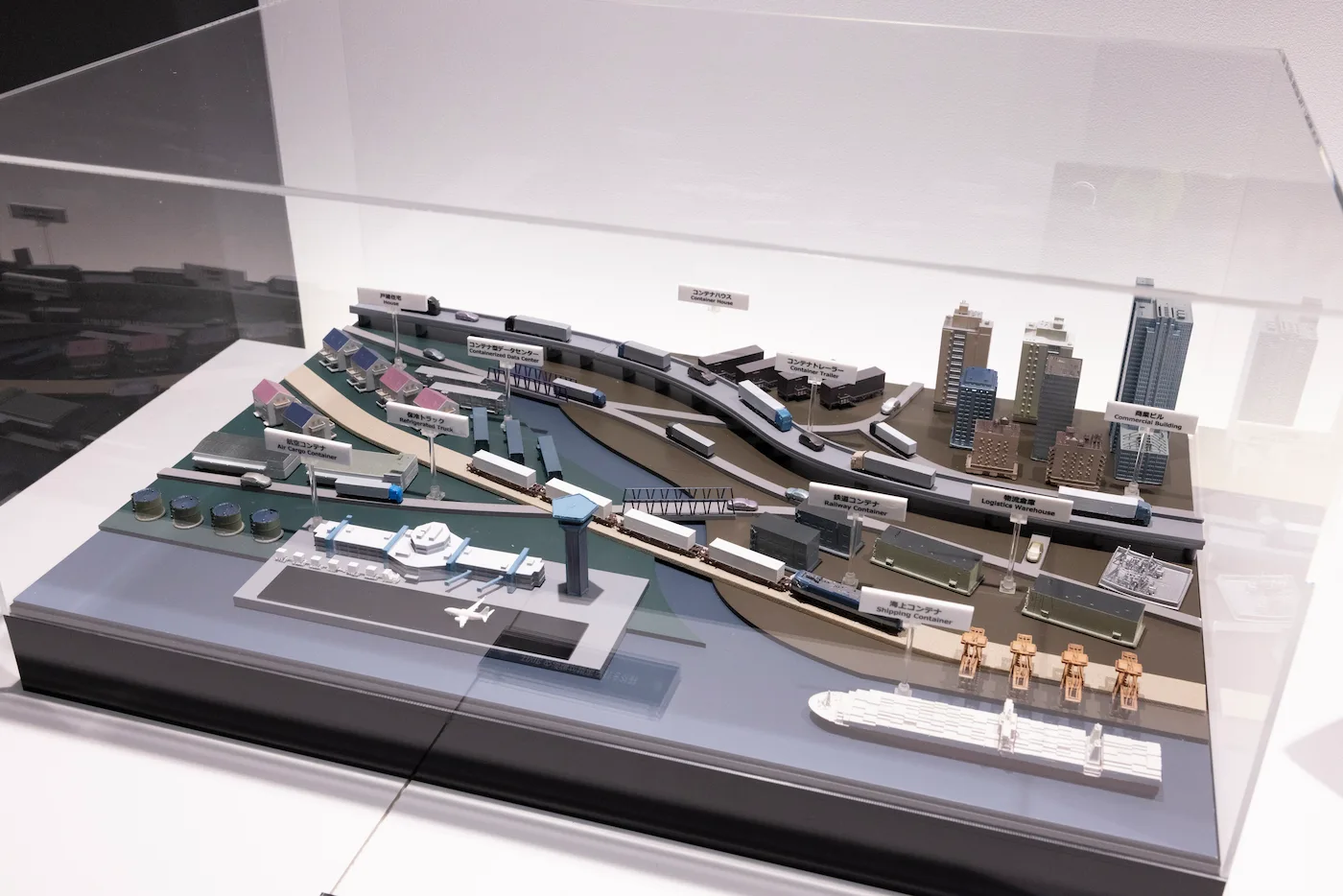
Building on our proven track record with cold transport boxes, our TIVIP is now expanding its challenge into the realm of “digital infrastructure,” which is closely tied to your daily life.
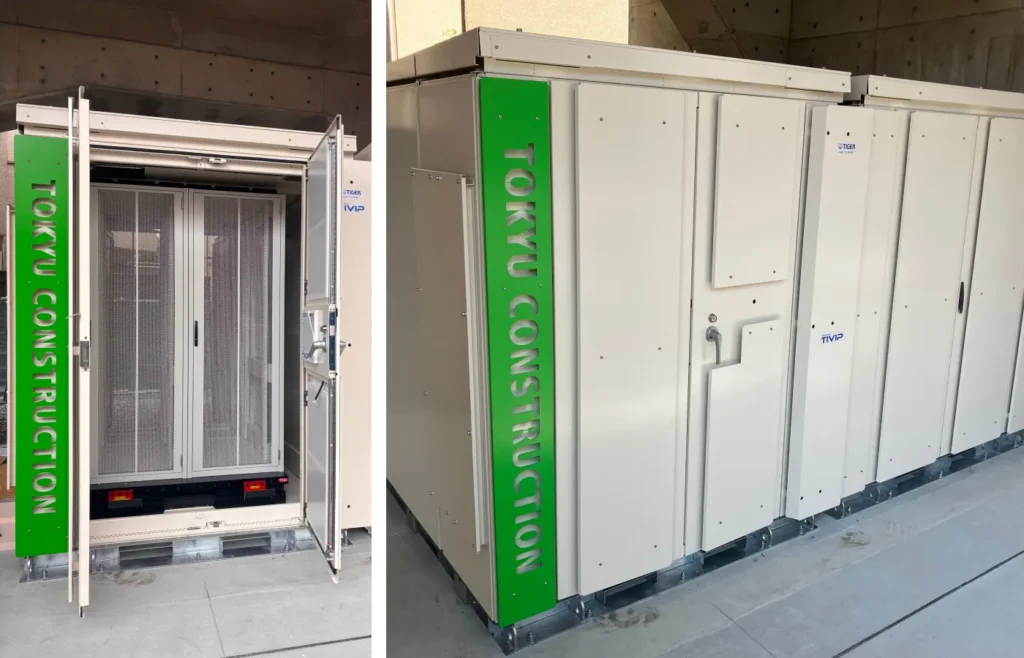
Starting in June 2026, we began supplying TIVIP as a building material for the “Urban Data Center under Railway Viaducts Demonstration” rolled out by the Tokyu Group. We are planning a full-scale cooling demonstration with actual running servers around November 2026.
This project began when Tokyu Construction, after seeing the TIVIP-equipped reefer container used in our cold retention tests, approached us with the idea: “Could this thinness and high insulation performance be used for thermal management in data centers?”
Behind the scenes of everyone smoothly enjoying videos and social media on their smartphones every day, massive server clusters (data centers) are working tirelessly, generating enormous amounts of heat. Even in limited, unconventional spaces like under elevated railway tracks, using the thin and robust TIVIP provides powerful insulation without sacrificing server installation space within the container, thereby significantly boosting cooling efficiency.
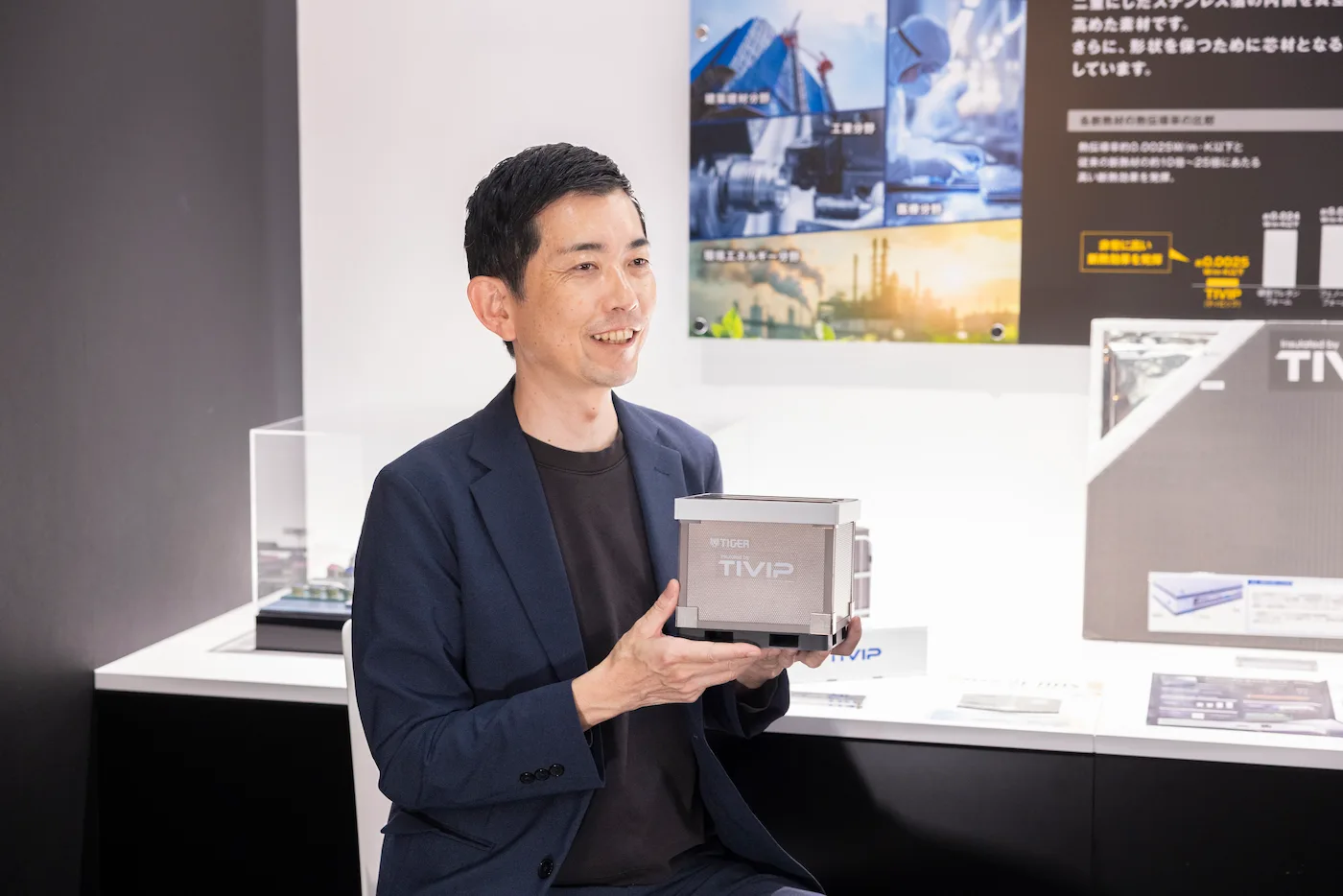
If our B2C message “HEAT TO HEART” is about delivering warmth to each individual’s heart, then our B2B “HEAT TO HEART” represents our passion to solve global warming and broader social issues themselves.
The next time you go out and walk under a railway viaduct, we would be delighted if you remember, even just for a moment: “Ah, Tiger’s technology might be right beneath my feet, preparing to safeguard the future of our communications.”
Related Contents



Profile
Norihito Minamimura
General Manager, R&D Marketing Group
Tiger Corporation