

Is It Dangerous to Use a Thermal Lunch Box in Summer? A Guide to Proper Use and Preventing Food Poisoning
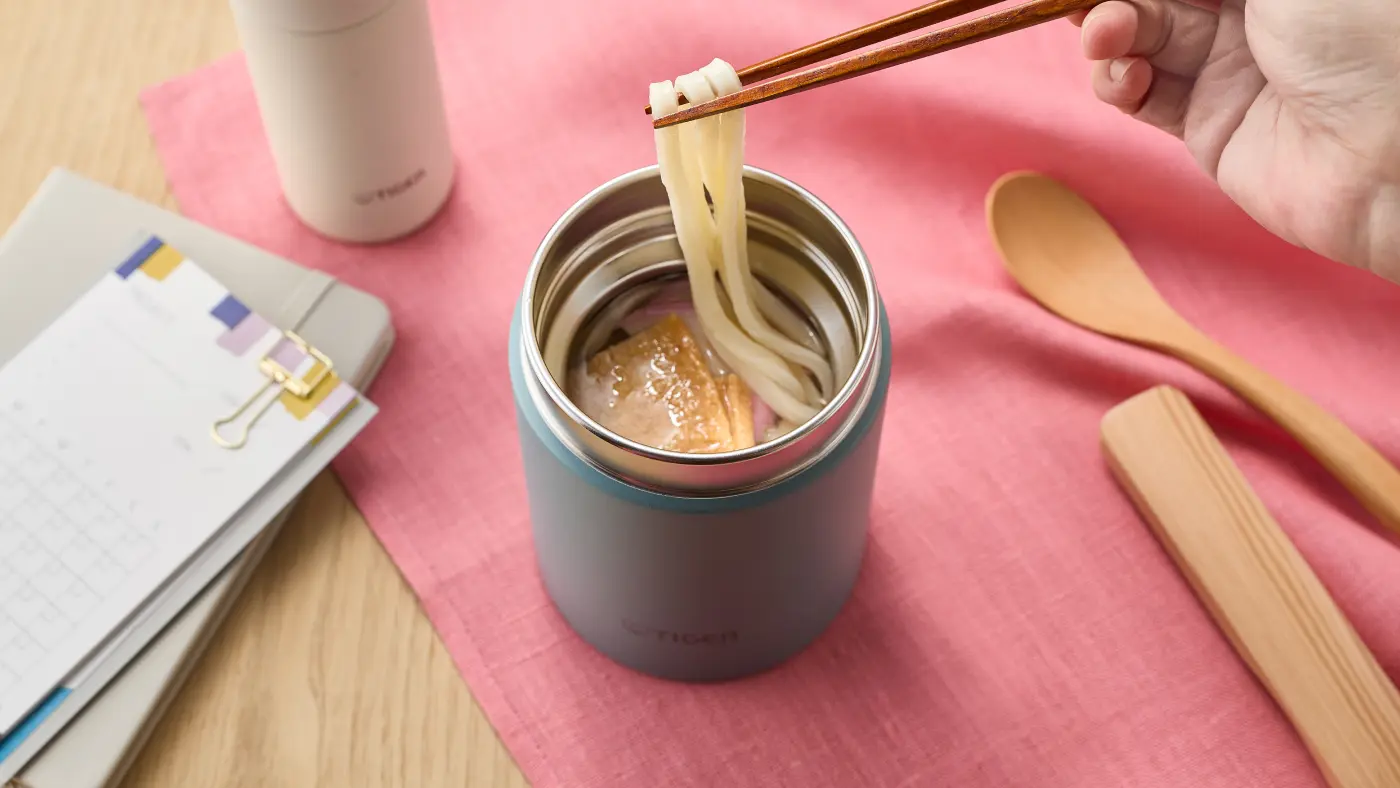
While many of us enjoy bringing a packed lunch to work or school, the high temperatures of summer often raise concerns about food poisoning. However, by using a thermal lunch box or a vacuum insulated food jar correctly, you can safely enjoy your lunch even in the summer heat. In this article, we’ll explore how to make the most of thermal lunch boxes, what to look for when choosing one, and share some of our top recommendations.
Table of Contents
Why are summer packed lunches considered risky?

Summer packed lunches are considered risky because hot and humid environments cause bacteria to multiply rapidly. Most bacteria that cause food poisoning begin to actively multiply at room temperature (around 20°C or 68°F), with their growth rate peaking around 30 to 40°C (86 to 104°F).
Summer in Japan, in particular, brings high temperatures and humidity, creating the ideal conditions for bacteria to thrive. Carrying a lunch box at room temperature and allowing it to become warm and stuffy inside a bag further increases this risk.
Even if the food looks and smells perfectly fine, bacteria may be multiplying inside, so the utmost caution is required.
Thermal lunch boxes and vacuum insulated food jars are safe in summer if used correctly
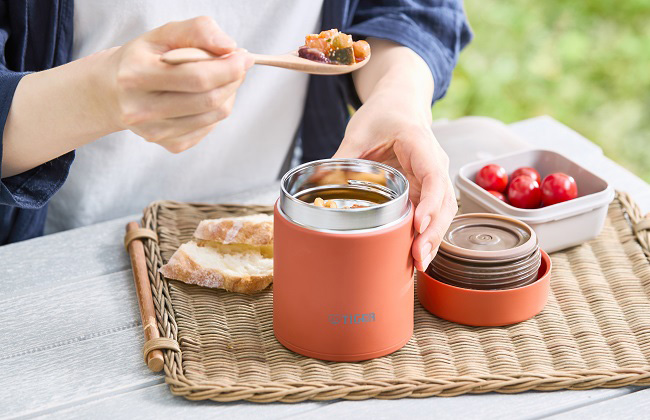
While many bacteria struggle to multiply in environments below 10°C (50°F) or above 65°C (149°F), the temperature range in between is considered the “danger zone” where bacteria multiply rapidly.
Although they are generally safer than standard lunch boxes, this relies on proper usage—such as thoroughly heating your side dishes and “preheating” the containers with boiling water beforehand.
Precautions when using thermal lunch boxes in summer
If used incorrectly, thermal lunch boxes can actually increase the risk of food poisoning. To prevent introducing or multiplying bacteria, it is crucial to pack the food according to the specific role of each container: “rice and soup containers” that maintain high temperatures to suppress bacteria, and “side dish containers” designed not to transfer heat.
Here are some key points for safely using a thermal lunch box in summer.
Use clean cooking utensils
The golden rule for preventing food poisoning is to avoid “introducing” bacteria into the containers during the cooking or packing process.
Much of food poisoning stems from “cross-contamination,” where bacteria attach to food during preparation. Once bacteria enter, they can multiply explosively in a short time given the right conditions, making caution essential.
Invisible bacteria may be present not only on chopsticks, cutting boards, knives, and storage containers but also on your fingers. In addition to washing your hands thoroughly before cooking, make sure to thoroughly clean and dry your utensils to prepare your lunch in a hygienic environment.
Pack rice and soup while piping hot
Containers for rice and soup feature a vacuum double-wall structure—just like our vacuum insulated bottles—that provides excellent heat retention. To maintain the “high temperature of 65°C or above” where bacteria cannot multiply, always pack them while they are piping hot, right after cooking or boiling.
Packing food at a lukewarm temperature maintains the optimal temperature zone for bacteria for an extended period, significantly heightening the risk of food poisoning.
Also, dishes like mixed rice and fried rice contain various ingredients, moisture, and nutrients, making them more prone to bacterial growth. In summer, it’s best to stick to simple white rice.
Let side dishes cool before packing
For side dishes, it is absolutely essential to let them cool completely before packing.
If packed while warm, the heat from the side dish gets trapped, creating an environment around 30 to 40°C where bacteria multiply most easily. It is important to distinguish the packing method: keeping rice and soup “hot” and letting side dishes “cool” to suppress bacterial activity.
Additionally, pay special attention to soft-boiled eggs, raw vegetables, and other items that have high moisture content and are insufficiently heated. Choose side dishes that have been cooked completely through to the center, such as grilled or deep-fried foods.
Store in a cool environment
Even vacuum insulated bottles with high heat retention can be affected to some extent if left in harsh, high-temperature environments, such as in direct sunlight or inside a hot car.
Since the “side dish container” is particularly susceptible to the outside temperature, we recommend using a dedicated insulated pouch when carrying it.
However, do not be overly reliant on the pouch; try to store your lunch box in a cool place, such as inside a desk or locker.
Eat as soon as possible and clean after use
Ideally, the contents of a thermal lunch box should be consumed within 6 hours of cooking.
Despite having excellent heat retention, the internal temperature gradually drops over time. If stored for too long, it becomes difficult to maintain the 65°C or higher temperature needed to suppress bacteria, so aim to eat your meal as soon as possible.
Furthermore, dirt tends to remain on the gaskets, lid grooves, and the rims of side dish containers. Even a slight unwashed residue can become a breeding ground for bacteria. After use, disassemble the parts, wash them carefully, and dry them thoroughly.
For a safe meal! Key points when choosing a thermal lunch box
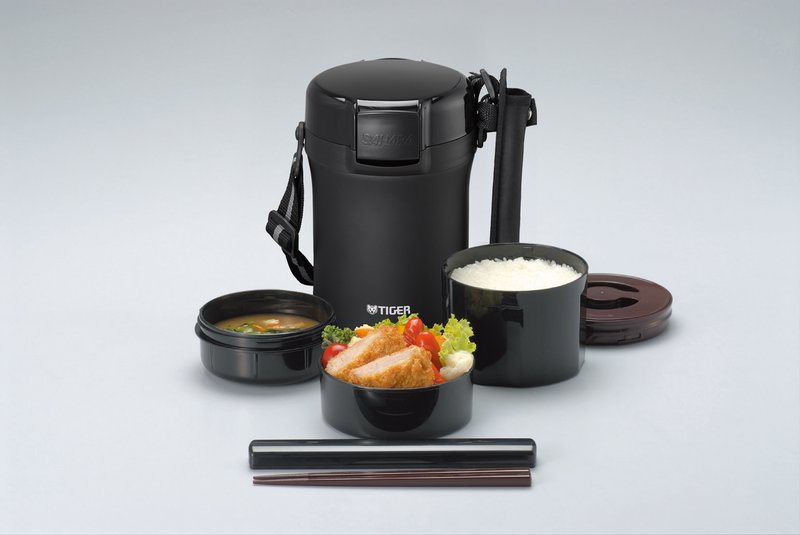
When it comes to thermal lunch boxes, choosing the right product is just as important as using it correctly. Let’s look at the points you should check.
Choose a product with high heat retention
The most important factor for a thermal lunch box is how long it can maintain the “high temperature of 65°C or above” to prevent the growth of food poisoning bacteria. Check the “heat retention effect” figures listed in the product specifications or instruction manual.
To maintain a safe temperature in summer, we recommend choosing a product with a stainless steel vacuum double-wall structure (vacuum insulation), which offers superior heat shielding performance.
Because it traps the heat inside and prevents outside air from entering, the temperature drop inside the container is gradual even in harsh summer environments.
Choose one with easy-to-wash parts
A container with leftover dirt can cause bacteria to transfer to the food the next time you use it.
Choosing a product with parts that can be finely disassembled for washing, or a simple design that makes it easy to remove dirt, is a key point in enhancing safety.
Additionally, selecting a “Dishwasher-safe” product not only makes daily cleaning much easier but also offers a sanitizing effect from high-temperature washing and drying.
Recommended thermal lunch boxes from Tiger Corporation
Here, we introduce some recommended thermal lunch boxes from Tiger Corporation that offer excellent heat retention and are easy to clean.
Lunch Box LWY-E461
The “Lunch Box LWY-E461” is a lunch box boasting excellent heat retention, combining a vacuum double-wall insulated container with a dedicated pouch. Since you can enjoy warm rice even after 6 hours, it is a great choice all year round, regardless of the season.
With a compact design that easily fits into a bag, the dedicated pouch can be placed either vertically or horizontally to suit your carrying style. It includes one rice container and two side dish containers, allowing you to pack a well-balanced meal with the main staple and side dishes kept separate.
The side dish containers feature a 4-point locking structure to prevent leaking and are treated with an Ag-based antibacterial finish for hygiene peace of mind. Both the rice and side dish containers can be used in the microwave if the lids are removed, making it perfect for those who want both warmth and portability.
Lunch Box LWU-A172/A202
The “Lunch Box LWU-A172/A202” is a full-fledged model that boasts excellent heat retention, utilizing the same vacuum double-wall structure as our vacuum insulated bottles. Because it firmly keeps the heat in by suppressing the effects of the outside temperature, you can enjoy a warm lunch even after time has passed.
The interior of the main body features a smooth “Super Clean” finish, which resists stains and odors and is easy to clean. The lid of the main body closes securely with a sturdy locking structure, providing peace of mind when carrying it.
The rice capacity is about 3 bowls for the LWU-A172, and about 4 bowls for the LWU-A202. It can also hold a soup pack, making it highly recommended for those who want a hearty meal of warm rice and soup.
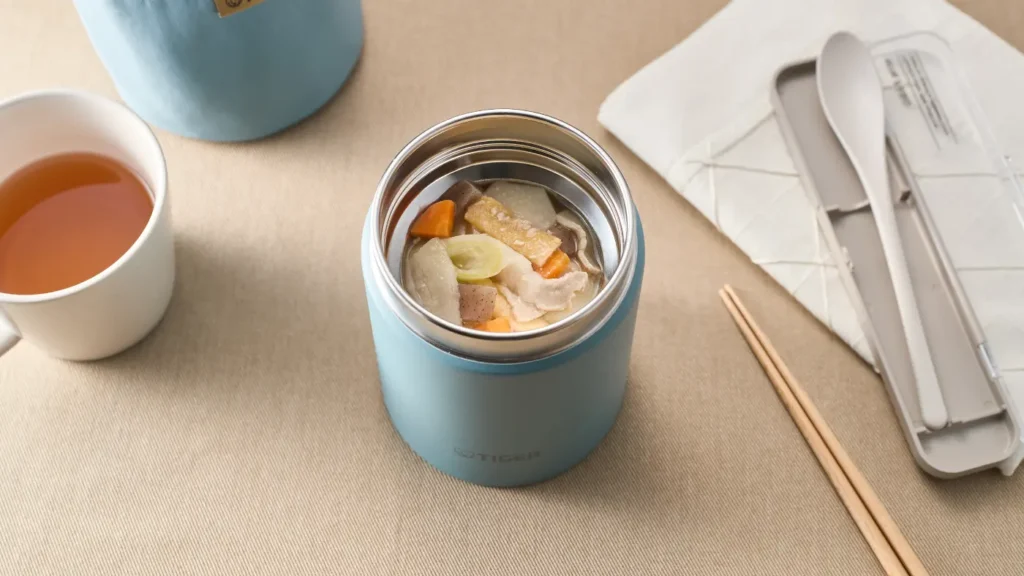
Vacuum Insulated Food Jar MKL-W040/W050/W075
The “Vacuum Insulated Food Jar MKL-W040/W050/W075” features excellent heat and cold retention thanks to its vacuum double-wall structure, making it a versatile food jar for everything from hot soups to cold desserts.
Its biggest feature is the “Stopper with the integrated gasket,” which combines the gasket and stopper into one piece. With fewer parts and an inner stopper that can be attached and detached with a single touch, it is easy to clean down to the finest details. Furthermore, all parts, including the main body, are Dishwasher-safe, allowing you to keep it clean for daily use.
The wide-mouth design with a diameter of approximately 7 cm makes it easy to pour in chunky soups and ensures smooth eating. It comes in three sizes: 400ml, 500ml, and 750ml, allowing you to choose the optimal capacity for your menu. It is perfect for those who want to save time preparing in the morning or enjoy a satisfying one-dish lunch.
Make the most of your thermal lunch box and enjoy a warm lunch even in summer
Summer packed lunches are prone to bacterial growth due to high temperatures and humidity, posing a risk of food poisoning if left at room temperature or carried around. While maintaining a temperature of 65°C or above (where bacteria cannot multiply) enhances safety, it is essential to use the containers correctly according to the ingredients.
Utilize thermal lunch boxes and vacuum insulated food jars to safely enjoy a delicious lunch even in summer.