

What is the Difference Between Food Processors and Blenders? A Guide on How to Use and Choose Them
Food processors and blenders may look similar, but their structures and the types of food preparation they excel at are quite different. Many people wonder, “Which one should I buy?” or “Which one is better suited for the dishes I want to make?” In this article, we will explain the differences and characteristics of each, along with tips on how to choose and use them according to your needs.
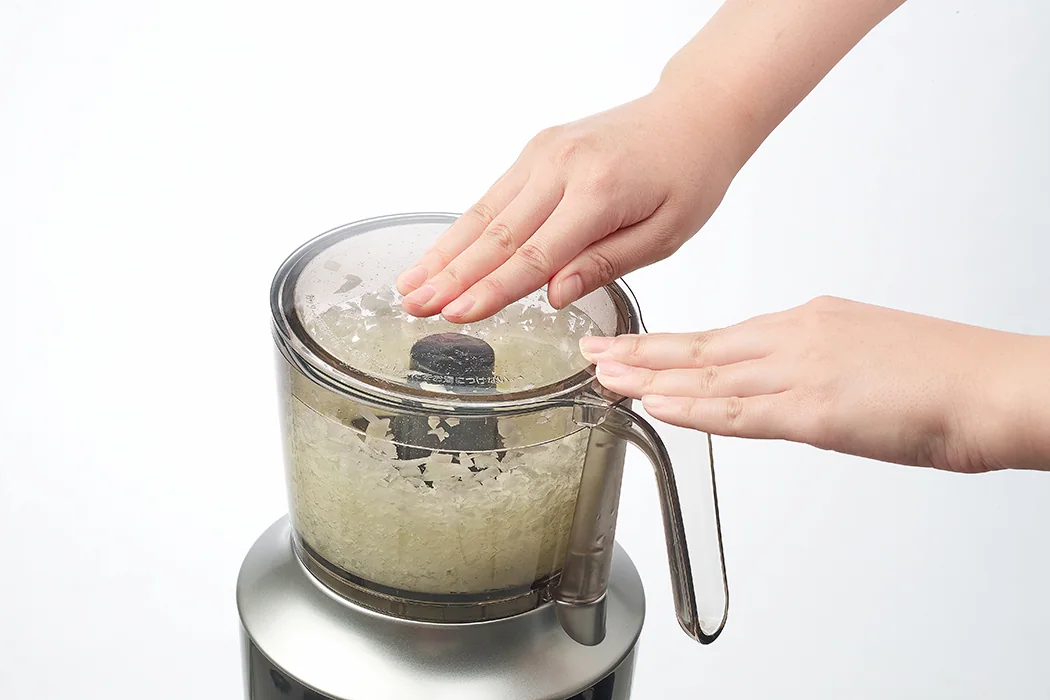
Table of Contents
Differences Between Food Processors and Blenders
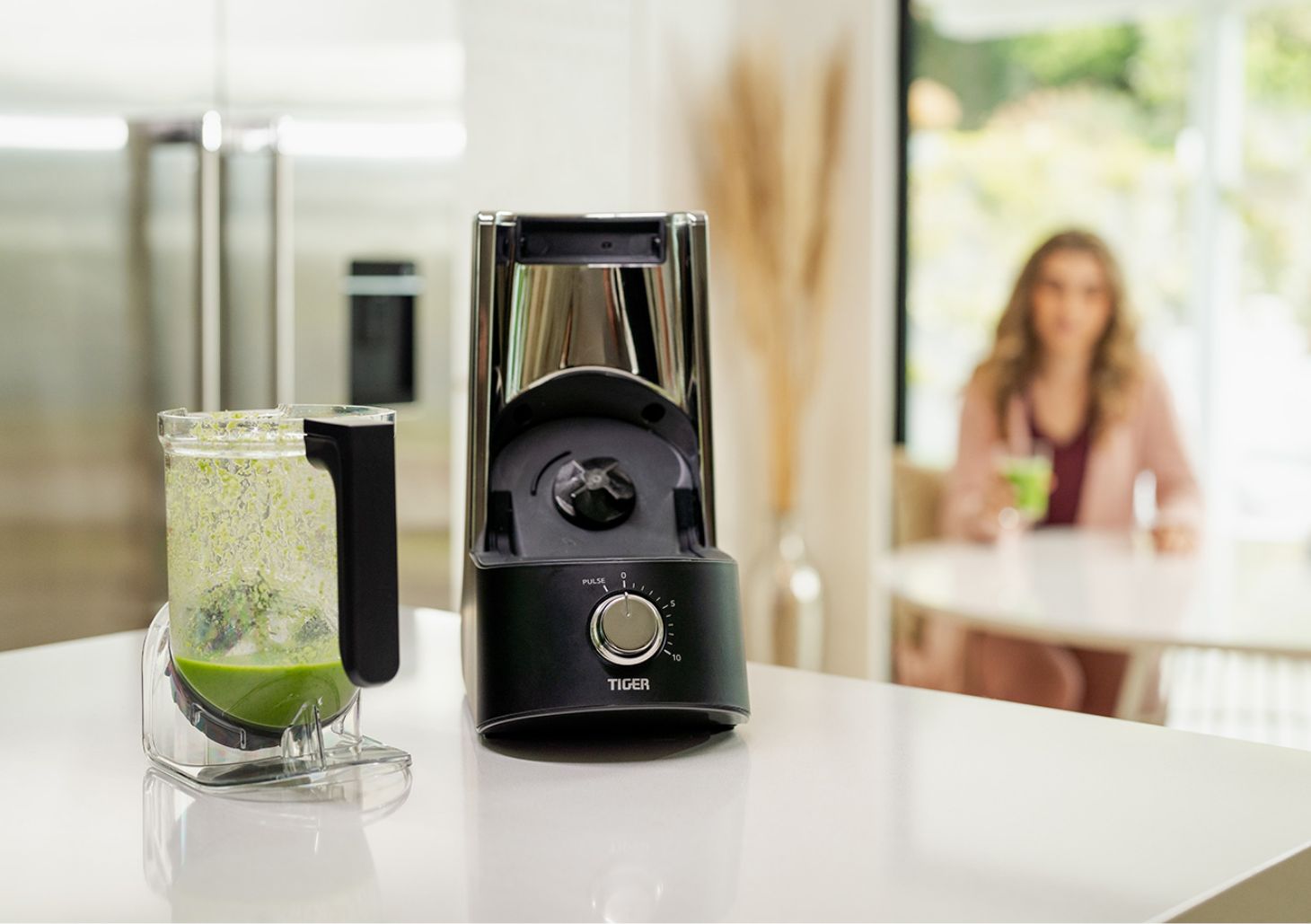
Both food processors and blenders are appliances that process food by rotating blades, but they differ significantly in their specialties and the resulting textures. Here, we will explain the characteristics of each in detail.
Characteristics of Food Processors
A food processor is an appliance that uses a high-speed, central metal blade to quickly prepare ingredients by chopping, mixing, crushing, and grating. For example, it can mince an onion—a task that usually takes time—in just a few seconds, significantly cutting down your prep time.
Many models come with interchangeable attachments, which is a major advantage as it allows for versatile use, from julienning and whipping to grating daikon radish, depending on your needs.
They generally fall into two categories: electric and manual. While electric models are powerful and can process large amounts at once, manual types are handy for quickly prepping small quantities of ingredients.
Characteristics of Blenders
A blender is an appliance in which small blades at the bottom of the container rotate at high speed to agitate ingredients together with liquids like water or milk. It excels at turning ingredients into smooth liquids or pastes.
Because it can finely crush dietary fibers, it is ideal for recipes where texture is key, such as smoothies and soups.
The main unit is typically a countertop model, but bottle-type blenders (tumbler blenders), which allow you to carry your drink right after making it, have also gained popularity in recent years.
Differences From Juicers, Mills, and Hand Blenders
Juicers, mills, and hand blenders are also easily confused appliances, but they differ in the final texture of the food and whether liquid is required.
A juicer is an appliance that extracts juice and separates the pulp, making it suitable for making juices from fruits and vegetables.
A mill is designed to finely grind dry ingredients with low moisture content, such as coffee beans and sesame seeds.
Hand blenders (immersion blenders) are typically handheld and are characterized by their ability to blend ingredients directly in a pot. They are well-suited for making dishes like pumpkin potage or corn soup.
Their specific characteristics are as follows:
| Appliance Name | Main Function | Finished State | Need for Liquid |
| Food Processors | Chopping / Mixing / Grating | Chunky to Paste (Solid) | Not required |
| Blenders | Agitating / Crushing | Smooth to Thick (Liquid) | Required |
| Juicers | Squeezing / Extracting | Smooth Juice (Liquid only) | Not required (Ingredient moisture is enough) |
| Blenders with Mill function | Grinding | Fine (Powder) | Either is fine |
| Hand Blenders | Mixing / Mashing | Paste to Liquid | Either is fine |
[By Purpose] Recommended Ways to Use Them
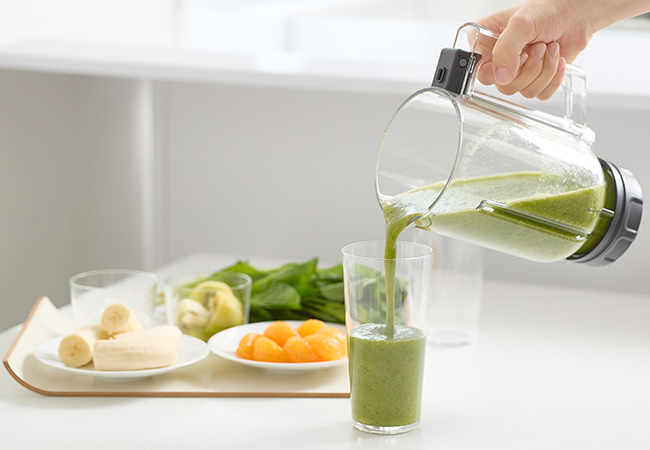
Understanding the differences between food processors and blenders and using them appropriately for your purpose will significantly improve your cooking efficiency. Here, we will explain which one to choose for specific situations.
[Prep Work & Baking] For Higher Efficiency, Choose a Food Processor
Food processors excel at time-consuming prep work, such as mincing onions and making ground meat. Because you can prepare ground meat to your preferred coarseness from a block of meat, it is ideal for those who are particular about the freshness and final outcome of their dishes.
They are also invaluable for making dough for tarts and cookies. Simply adding the ingredients and running the machine mixes everything quickly and evenly, significantly lowering the hurdle of baking.
[Juices, Smoothies & Baby Food] For a Smooth Finish, Choose a Blender or Hand Blender
When you want to process ingredients to a smooth texture, such as for smoothies or baby food, a blender or hand blender is the perfect choice.
When making smoothies, adding a small amount of liquid stabilizes the blade rotation, ensuring an even blend. Also, if you plan to use ice, always check in advance if the model is “ice-compatible.”
Furthermore, they are highly useful for making purees during the early stages of baby food. We recommend switching appliances as your child grows—for example, switching to a food processor when you want to leave some texture from the middle stage onward, or when you need to make larger batches quickly.
How to Choose Between Food Processors and Blenders
When selecting a food processor or a blender, it is important to consider not only what you will use it for but also your lifestyle and kitchen space. Here, we outline the key checkpoints to ensure even first-time buyers won’t be lost.
Capacity and Size
The amount you can process at one time varies by product, so it is essential to choose a size that fits the number of people in your family and your intended use. If the capacity is insufficient, not only will you have the hassle of working in multiple batches, but it could also cause the machine to break down.
For example, if you are kneading about 600g of meat at once—such as for a family of four’s hamburger steaks—a large-capacity food processor would be easiest to use as a rule of thumb.
If your goal is to make a single serving of a smoothie or soup, a compact blender around 300ml to 400ml, or a space-saving bottle-type blender that you can drink directly from, would be convenient.
Ease of Cleaning
Because food processors and blenders have many parts, “ease of washing” is a crucial point for long-term use.
If you want to use it easily every day, opting for a model with fewer parts, a flat-shaped blade that doesn’t easily collect dirt, or a dishwasher-safe model can significantly reduce the burden of cleaning up.
Also, pay attention to the material of the container. Tritan™ (resin) is lightweight and durable, less prone to breaking compared to glass, and has the advantage of being relatively resistant to odors and color transfer.
Tiger’s products include models that use lightweight, easy-to-handle Tritan™ (resin) cups, as well as stainless steel cups that resist color stains and stay clean. Types where the cup, lid, and gaskets can be fully washed in a dishwasher are also available, making them ideal for those who prioritize saving time on household chores.
If You’re Unsure, We Recommend an All-in-One Model
If you are torn between choosing a food processor or a blender, it is a good idea to choose a multifunctional all-in-one model.
With a model that handles multiple roles in a single unit, you can chop, mix, grate, whip, and more simply by changing attachments. It is also suitable for those purchasing kitchen appliances for the first time or those living alone with limited space.
Frequently Asked Questions About Food Processors and Blenders
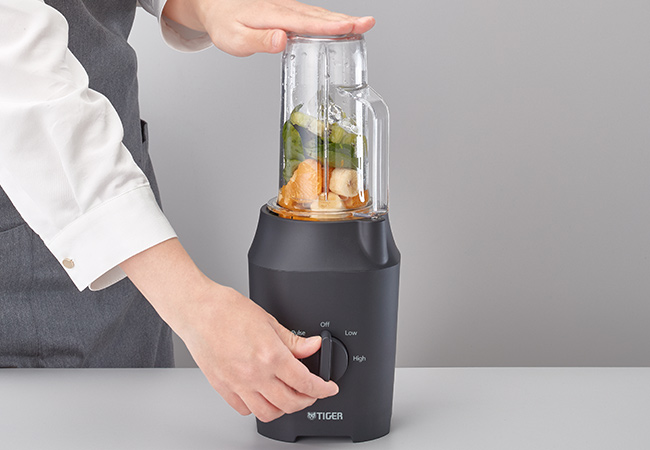
Kitchen appliances are convenient helpers that support our daily chores, but to fully draw out their performance, it is vital to use them correctly. From here, we will address common questions regarding food processors and blenders.
[General] Can it crush ice?
Whether it can crush ice depends on the model. Using ice in an incompatible model poses the risk of chipping the blade or damaging the motor, so always check the instruction manual to see what type of ice is permitted (e.g., ice from a home refrigerator or hard, commercially sold ice).
Moreover, many blenders are designed on the premise that they will be used with liquids. To avoid malfunction, be sure to always pour the liquid in first before adding the ice.
[General] Can I use frozen fruits?
Whether frozen fruits can be used also varies by model. Even for compatible models, dropping them in while they are rock hard can put excessive strain on the blades, motor, and container.
When using them, slightly thawing them at room temperature beforehand will allow for smoother rotation and reduce the risk of breakdowns. Always check the condition of the ingredients and use the appliance within a range that does not strain it.
Understand the Characteristics and Differences to Use Them Wisely
Properly understanding the respective specialties of food processors and blenders and choosing one that fits your lifestyle is the first step to creating a comfortable kitchen. Having the optimal device will not only increase your daily cooking efficiency but also expand your cooking repertoire. We hope this article helps you find the perfect item to enrich your dining table.
* “Tritan” is a trademark or registered trademark of Eastman Chemical Company.